








What's Happening?
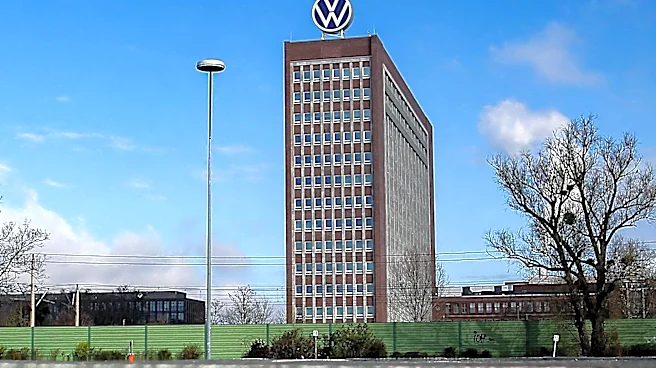
The German state of Lower Saxony is considering supporting Israeli defense company Rafael in establishing operations at Volkswagen's Osnabrueck site. This development comes as Volkswagen plans to end production of its T-Roc Cabriolet at the site next
year. Various strategies are being explored to facilitate Rafael's entry, including splitting the Osnabrueck operation into separate entities. Rafael aims to produce components for Israel's Iron Dome missile defense system at the plant. Despite objections from Qatar, a major Volkswagen shareholder, Lower Saxony remains optimistic about the project's success. The state is even contemplating taking over the plant to manage restructuring risks before transferring operations to Rafael. Volkswagen is under pressure to restructure due to high costs and excess capacity, which have affected its profit margins.
Why It's Important?
This potential collaboration between Lower Saxony and Rafael highlights the strategic importance of the Osnabrueck site for both regional economic stability and international defense manufacturing. For Volkswagen, this move is part of a broader restructuring effort to address financial challenges and adapt to global market pressures. The involvement of a defense company like Rafael could bring new industrial capabilities and jobs to the region, offsetting some of the economic impacts of Volkswagen's restructuring. However, the project faces challenges, including shareholder objections and the complexities of transferring plant operations. Successful implementation could set a precedent for similar industrial collaborations in Europe, influencing regional economic policies and defense manufacturing strategies.
What's Next?
If the project proceeds, Lower Saxony may take over the Osnabrueck plant to facilitate Rafael's operations, potentially involving significant workforce and restructuring management. Stakeholders, including Volkswagen and its shareholders, will need to navigate complex negotiations to finalize the deal. The outcome could influence future industrial policies in Germany, particularly regarding the integration of defense manufacturing into civilian industrial sites. Additionally, the project's success or failure could impact Volkswagen's ongoing restructuring efforts and its ability to compete in the global automotive market.