







What's Happening?
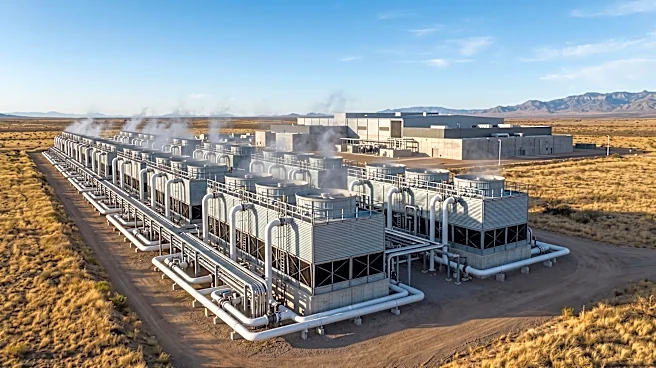
U.S. data centers consumed an estimated 17.4 billion gallons of water directly for cooling in 2023, a significant increase from 5.6 billion gallons in 2014. This growing demand for water by data centers, particularly those supporting artificial intelligence
(AI), is raising concerns as a substantial portion of these facilities are located in areas experiencing high or extremely high water scarcity. According to Business Insider's analysis, approximately 30% of planned and existing U.S. data centers are in water-stressed regions, a figure that rises to 43% for facilities exceeding 40 megawatts. Furthermore, two-thirds of data centers built or developed since 2022 are situated in such stressed areas. Around 75% of the water supplied to U.S. data centers originates from municipal systems, indicating a direct competition for water resources with local communities. While AI's global water usage is currently a small fraction of overall freshwater withdrawals (estimated at 0.07% to 0.1% for withdrawal and 0.01% for consumption by 2027), its localized impact in water-scarce regions is becoming increasingly pronounced.
Why It's Important?
The increasing water consumption by U.S. data centers, especially those supporting AI, presents a critical challenge for water resource management and local communities. The concentration of these facilities in water-stressed areas exacerbates existing scarcity issues, potentially leading to increased competition for municipal water supplies. This situation can strain local infrastructure, impact agricultural practices, and affect public health in regions already struggling with limited water availability. The lack of comprehensive reporting on water usage by data centers, as evidenced by the low response rate to Texas's mandatory reporting rule, hinders effective planning and mitigation efforts. The long operational lifespan of data centers means that decisions made today regarding their location and water management strategies will have lasting consequences for decades, influencing regional economic stability and environmental sustainability. This trend highlights the need for more robust national planning and transparent reporting to ensure that critical infrastructure development aligns with sustainable resource management.
What's Next?
Addressing the water consumption of U.S. data centers will likely involve increased scrutiny and potential regulatory measures. The low response rate to Texas's mandatory reporting rule suggests a need for more stringent enforcement or new legislation to ensure transparency in water usage. Future developments may include incentives for data centers to adopt more water-efficient cooling technologies or to locate in regions with abundant water resources. There could also be a push for national planning initiatives to guide the placement of new data centers, considering factors like water availability and grid capacity at the feasibility stage. Stakeholders, including local governments, environmental groups, and the tech industry, will likely engage in discussions to develop sustainable solutions that balance technological advancement with environmental responsibility. The ongoing debate between water withdrawal (what is taken) and consumption (what is not returned) will also be crucial in shaping future water management policies for data centers.
Beyond the Headlines
The localized impact of data center water usage, particularly in water-scarce regions, extends beyond mere consumption figures. It raises ethical questions about equitable resource distribution and the responsibility of large corporations in areas facing environmental stress. The reliance on municipal water systems by a significant portion of U.S. data centers underscores a potential conflict between industrial growth and community needs. This situation could lead to social and political tensions, especially in communities where water access is already a contentious issue. Furthermore, the lack of comprehensive and transparent data on water usage by data centers highlights a broader challenge in environmental governance and corporate accountability. The long-term implications could include shifts in regional development patterns, with water availability becoming a key determinant for technological infrastructure investment. This scenario necessitates a re-evaluation of how economic development is balanced with ecological limits and community well-being.