
What's Happening?
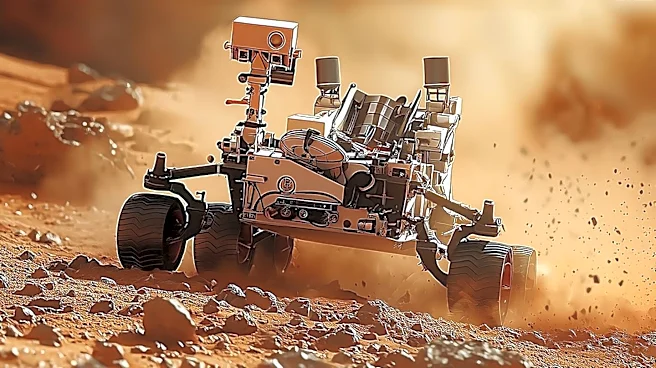
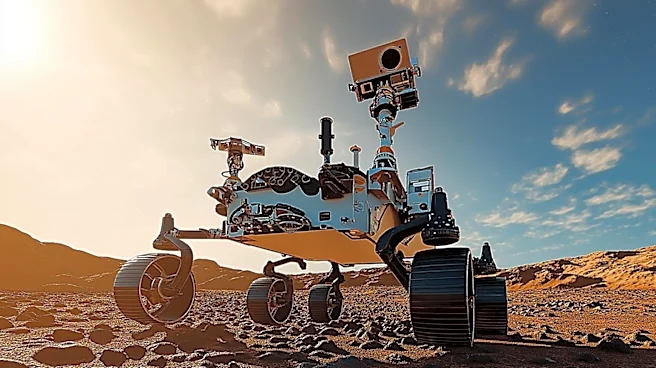
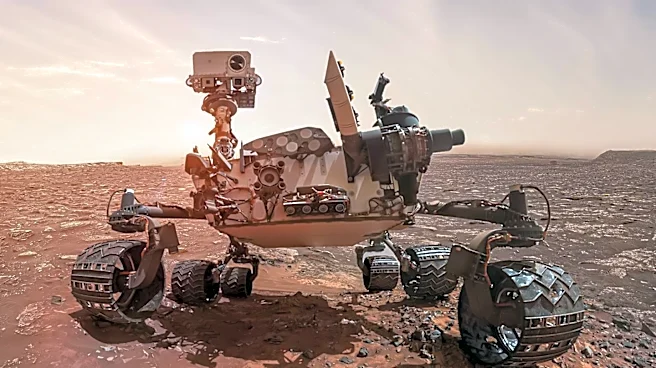
NASA's Curiosity rover has discovered a vast area of honeycomb-like textures on Mars, known as polygonal fractures, in a region called Valle Grande. These features, each measuring about 1.5 to 3 inches
across, were captured in a 360-degree panorama by the rover on its 4,930th and 4,931st Martian days. The discovery is significant due to the scale of these formations, which have not been observed in such abundance before. The mission's project scientist, Ashwin Vasavada, noted the potential for these features to provide insights into the geological processes on Mars. The rover has been exploring Mars since 2012, uncovering evidence of ancient water and conditions that could have supported microbial life.
Why It's Important?
The discovery of these polygonal fractures is crucial for understanding Mars' geological history and the planet's potential to have supported life. The formations may offer clues about past environmental conditions, such as temperature fluctuations and water presence. This finding adds to the body of evidence suggesting that Mars once had a climate capable of sustaining life. The ongoing research by Curiosity helps inform future missions and the search for life beyond Earth, reinforcing the importance of continued exploration and study of the Martian surface.
What's Next?
Curiosity will continue its ascent of Mount Sharp, further investigating the geological features and collecting data to understand the processes that formed these polygonal fractures. Scientists will analyze the shapes and chemistry of the formations to determine their origins. The findings could influence future Mars missions, including those focused on sample return and human exploration, by providing a better understanding of the planet's past and its potential habitability.