





What's Happening?
Pennsylvania Governor Josh Shapiro has publicly urged President Trump and Congress to implement federal regulations for artificial intelligence (AI) development. His call comes in response to warnings from AI industry leaders, including the CEO of Anthropic,
Dario Amodei, who suggested that unchecked AI advancement poses significant risks, potentially leading to catastrophic outcomes. Governor Shapiro emphasized that AI development should not be solely controlled by private entities, especially when these companies themselves are advocating for restraint and regulation. He drew parallels between the need for AI regulation and the existing federal oversight in industries like pharmaceuticals and aircraft manufacturing, where products must meet strict standards set by agencies such as the FDA and FAA before reaching consumers. Shapiro's statements highlight a growing concern among some political figures and industry experts about the rapid progression of AI and the perceived lack of governmental action to establish necessary safeguards.
Why It's Important?
The push for federal AI regulation by a state governor underscores the increasing recognition of AI's profound societal and economic implications. Without clear federal guidelines, the U.S. risks a fragmented regulatory landscape, potentially hindering innovation in some areas while leaving critical gaps in others. The comparison to pharmaceutical and aviation industries highlights the potential for AI to impact public safety and well-being on a massive scale, necessitating a robust, centralized regulatory framework. This debate is crucial for U.S. industries, as it will determine the operational environment for AI companies, influencing investment, research, and development. For the public, federal oversight could mean enhanced protections against potential AI-related harms, such as job displacement, privacy breaches, or even more severe, unforeseen consequences. The involvement of state leaders like Governor Shapiro also signals a broader political will for action, which could accelerate the legislative process in Washington.
What's Next?
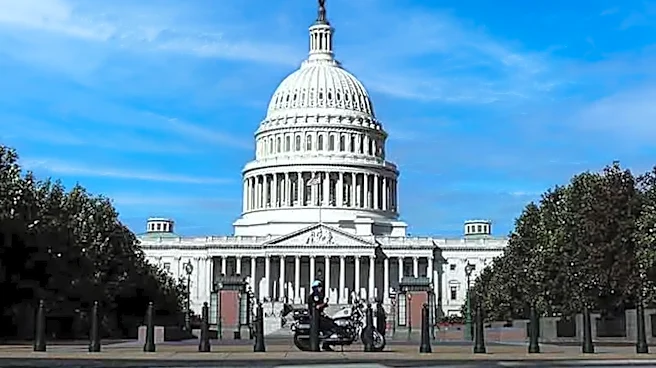
The immediate future will likely see continued debate and pressure on Congress and President Trump to address AI regulation. House Democrats, led by Rep. Sam Liccardo, have already called for Congress to remain in session to pass meaningful AI safeguards, proposing measures such as transparency mandates, evaluation of frontier models, and 'kill switch' requirements. However, House Speaker Mike Johnson has expressed caution against rushing into regulation, suggesting it could hinder American innovation and lead to the U.S. losing the AI race to countries like China. He has called for a meeting between Washington leaders and AI industry heads to determine a path forward, advocating for self-policing by companies in the interim. The upcoming midterm elections and the hyper-partisan environment in Washington will test lawmakers' ability to respond to these urgent calls for action, with the potential for legislative gridlock or, conversely, a bipartisan effort to establish foundational AI policies.
Beyond the Headlines
Beyond the immediate legislative and regulatory discussions, the call for federal AI oversight touches upon deeper ethical and philosophical questions about humanity's control over advanced technology. The warnings from AI industry leaders themselves, likening the situation to 'Dr. Frankenstein telling us the monster is escaping,' highlight a profound concern about the autonomous nature and potential unpredictability of future AI systems. This situation could trigger a re-evaluation of the balance between technological progress and societal safety, potentially leading to new paradigms for responsible innovation. The debate also brings to the forefront the challenge of global coordination on AI governance, as the technology's impact transcends national borders. Establishing domestic guardrails could set a precedent for international cooperation, or conversely, create competitive disadvantages if not carefully managed. The long-term implications could include shifts in educational priorities, workforce development, and even the fundamental structure of democratic governance as AI's influence grows.