
What's Happening?
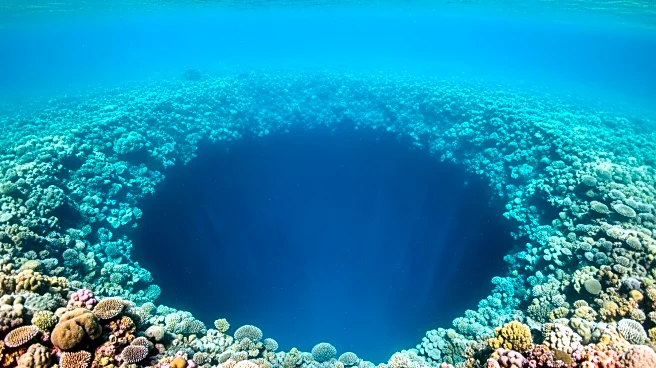
A team of researchers has confirmed the discovery of the deepest known blue hole on the planet, located in the waters of Chetumal Bay, Mexico. The Taam Ja’ Blue Hole, as it is called, plunges over 420
meters below sea level, surpassing previous measurements of other underwater sinkholes. Despite advancements in exploration technology, the bottom of this marine cavity remains unreached, leaving its full depth and potential secrets unknown. The discovery was detailed in a study published in Frontiers in Marine Science, following a December expedition that utilized new instruments to challenge previous depth estimates. The site is now ranked deeper than blue holes in the South China Sea, Bahamas, and Egypt.
Why It's Important?
The discovery of the Taam Ja’ Blue Hole is significant as it highlights the vast unexplored regions of our oceans, which could hold critical insights into marine biology and geology. Blue holes are known to serve as biological oases, supporting diverse marine life isolated from the surrounding sea. Understanding these ecosystems can provide valuable information about biodiversity and the adaptation of species in extreme environments. Additionally, the discovery underscores the limitations of current exploration technology and the need for further advancements to explore such challenging environments. This could lead to new scientific breakthroughs and a better understanding of underwater ecosystems.
What's Next?
Future expeditions are likely to focus on reaching the bottom of the Taam Ja’ Blue Hole to fully understand its depth and the secrets it may hold. Researchers may employ more advanced technology or innovative exploration methods to overcome the challenges posed by the narrow entrances and complex formations of the blue hole. The findings could attract interest from marine biologists, geologists, and environmental scientists, potentially leading to collaborative efforts to study the unique ecosystems within these formations. The National Oceanic and Atmospheric Administration (NOAA) and other marine research organizations may play a crucial role in facilitating these explorations.