


What's Happening?
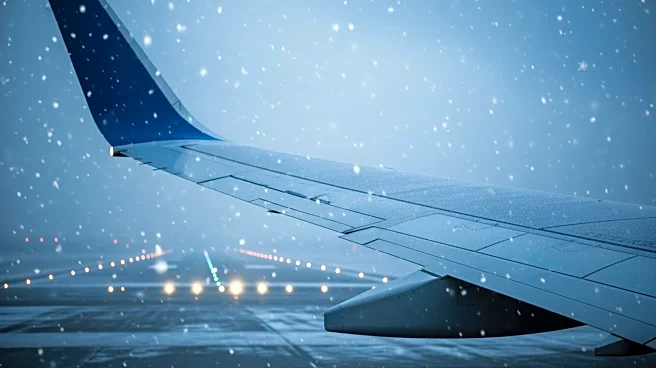
A significant winter storm is poised to impact the East Coast of the United States, starting on February 22, 2026. Airlines including American, Delta, JetBlue, Southwest, and United have preemptively waived change fees and fare differences for travelers
with flights scheduled on February 22 and 23. This decision comes as the Northeast and Mid-Atlantic regions brace for blizzard conditions, which are expected to severely disrupt travel. The governors of New Jersey and New York have declared states of emergency in anticipation of the storm. AccuWeather forecasts suggest that over 2,500 flights could be canceled due to the storm, with major airports like JFK, LaGuardia, and Boston Logan advising passengers to check flight statuses before heading to the airport. Amtrak has also adjusted its services for the affected days.
Why It's Important?
The impending storm highlights the vulnerability of transportation infrastructure to severe weather events, which can have cascading effects on the economy and daily life. The proactive measures by airlines to waive fees aim to mitigate passenger inconvenience and manage airport congestion. However, the storm's impact could extend beyond travel delays, affecting supply chains and local economies reliant on tourism and business travel. The declaration of states of emergency underscores the potential severity of the storm, prompting residents to prepare for possible power outages and hazardous road conditions. The situation serves as a reminder of the need for robust emergency preparedness and infrastructure resilience in the face of increasingly frequent extreme weather events.
What's Next?
As the storm progresses, airlines and transportation services will continue to monitor conditions and adjust operations accordingly. Travelers are advised to stay informed through official channels and consider alternative travel plans. Local governments may implement additional safety measures, such as road closures and public transportation adjustments, to ensure public safety. The response to this storm could influence future policies on emergency management and infrastructure investment, particularly in regions prone to severe weather.