






What's Happening?
NASA’s Neil Gehrels Swift Observatory is set to reenter Earth’s atmosphere this week following the failure of a rescue mission. Launched in November 2004, the satellite operated for nearly 22 years, significantly exceeding its two-year design life. During
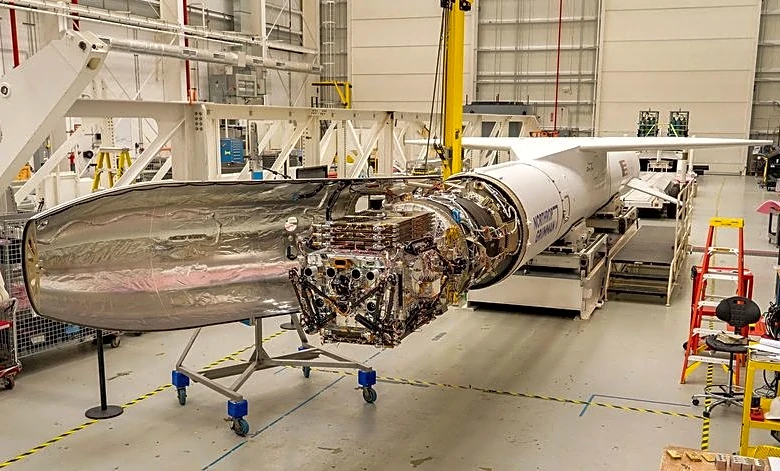
its operational period, Swift detected over 2,000 gamma-ray bursts and studied more than 1,400 supernovae, contributing to approximately 7,000 scientific papers. The spacecraft's orbit dropped below 275 kilometers by the end of October due to increased drag from solar activity expanding the upper atmosphere. A mission by the private company Katalyst Space Technologies, named LINK, attempted to raise Swift’s orbit in July but failed due to an attitude-control system malfunction, making reentry inevitable.
Why It's Important?
The uncontrolled reentry of the Swift Observatory highlights growing concerns about space debris and its potential impact on Earth. While most of the spacecraft is expected to burn up, astrophysicist Jonathan McDowell estimates that approximately 10% of its 1.5-metric-ton mass, potentially 100 kilograms of debris, could reach the surface. This is particularly concerning for astronomical satellites like Swift, which contain dense mirror assemblies and heat-resistant components. The probability of debris harming a person or damaging infrastructure is estimated at 1 in 10,000. This event serves as a critical reminder of the need for improved strategies for deorbiting or safely disposing of aging satellites, especially as the number of objects in Earth's orbit continues to increase.
What's Next?
The exact impact location of Swift's debris is unpredictable, though its orbit covers a band between 20° north and 20° south latitude, passing over densely populated regions in Africa, India, Southeast Asia, Australia, Central America, and South America. This event will provide valuable data for engineers to design safer spacecraft in the future, by observing which components withstand the high temperatures of reentry. It will also allow scientists to assess how vaporized metals from reentering spacecraft affect the chemistry of the upper atmosphere and the ozone layer. The incident is expected to intensify discussions and efforts within the space community regarding responsible space practices and the development of technologies to mitigate space debris.
Beyond the Headlines
The Swift Observatory's demise underscores a broader challenge in space exploration: the long-term sustainability of Earth's orbit. As more satellites are launched, the risk of uncontrolled reentries and collisions increases, posing threats to both ground populations and operational spacecraft. This incident could accelerate the development of international regulations and technological solutions for active debris removal and more controlled deorbiting mechanisms. It also highlights the ethical responsibility of spacefaring nations and private companies to manage the end-of-life of their satellites, ensuring that the benefits of space exploration do not come at the cost of increased risk to Earth or the space environment. The scientific community will also gain insights into material science under extreme conditions, informing future spacecraft design.