








What's Happening?
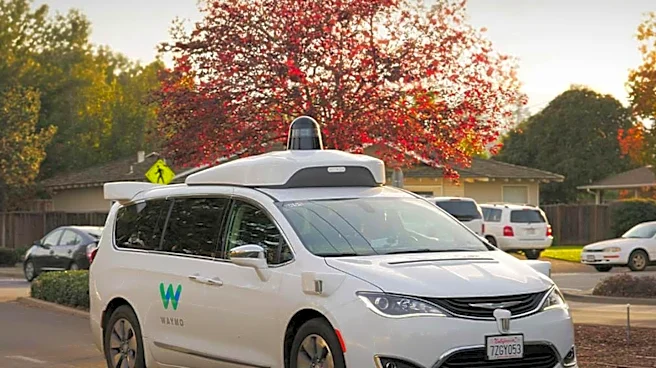
Waymo, an autonomous driving technology company, is focusing on how its self-driving cars can enhance women's freedom of movement and personal safety. According to Suzanne Philion, Chief Marketing Officer at Waymo, the company believes women should reclaim
the mental energy often spent on safety considerations when traveling. Waymo's data indicates that over half of women riders in established service markets report an improved sense of personal safety when using their autonomous vehicles. The company highlights that its service allows riders to control their environment, whether taking a work call, enjoying silence, or playing music, thereby offering a space entirely on their own terms. Waymo partnered with a women-led creative and production crew to produce a film illustrating this concept.
Why It's Important?
This initiative by Waymo addresses a significant societal concern in the U.S. and globally: women's personal safety and comfort during travel. By offering a transportation option that mitigates some of the anxieties associated with traditional ride-sharing or public transport, Waymo could empower women with greater independence and flexibility in their daily lives. This focus on safety and control could also influence the broader adoption of autonomous vehicle technology, particularly among demographics that prioritize these factors. For the U.S. transportation sector, it highlights a potential market differentiator for autonomous services beyond mere convenience or efficiency, emphasizing social impact and user well-being.
What's Next?
Waymo's emphasis on personal safety and freedom of movement for women could lead to increased adoption of autonomous vehicles, especially in urban areas where safety concerns are more prevalent. Other autonomous vehicle companies may follow suit, integrating similar safety-focused features and marketing strategies. This could also spur further research into the psychological and social benefits of autonomous transportation. As the technology matures and becomes more widespread, it has the potential to reshape urban planning, public transportation policies, and even social norms around travel, particularly for vulnerable populations. The success of such initiatives will depend on continued technological reliability and public trust.
Beyond the Headlines
The concept of 'freedom of movement' for women, as addressed by Waymo, delves into deeper societal issues of gender inequality and personal security. The unspoken checklist many women go through before entering a car reflects systemic concerns about safety that impact daily choices and opportunities. Autonomous vehicles, by removing the human driver, could fundamentally alter these dynamics, offering a novel solution to a long-standing problem. This development could contribute to a more equitable urban experience, allowing women to participate more freely in economic, social, and cultural activities without the constant burden of safety concerns. It also raises questions about how technology can be intentionally designed to address specific social challenges and promote inclusivity, moving beyond purely functional applications to enhance human well-being.