




What's Happening?
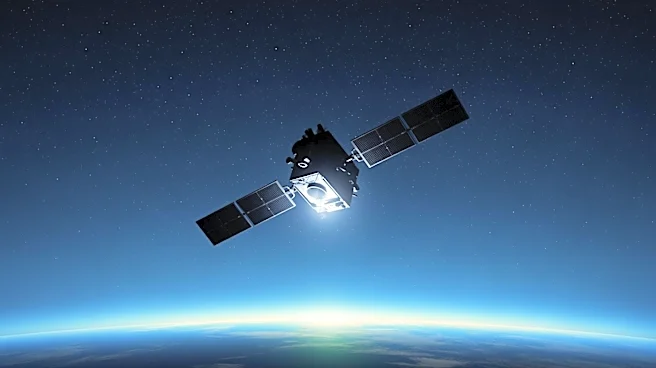
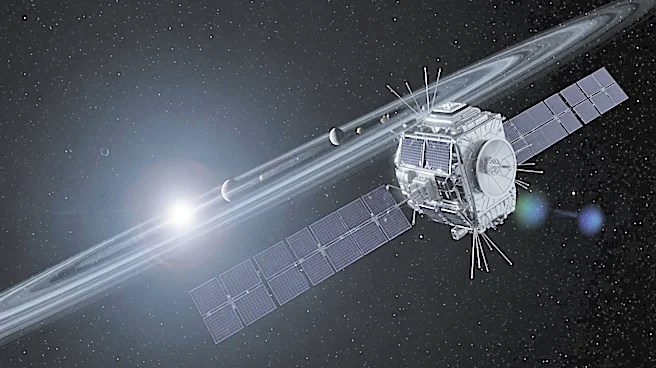
The Transiting Exoplanet Survey Satellite (TESS), a NASA mission, has identified over 10,000 exoplanet candidates within a year, significantly accelerating the pace of discovery in planetary astronomy. This achievement was made possible through the use
of artificial intelligence, which analyzed data from approximately 83 million stars. TESS, launched in 2018, is designed to search for planets around nearby stars using the transit method, which detects small, periodic drops in a star's brightness as a planet passes in front of it. The project, known as the T16 Planet Hunt, utilized semi-automated search and machine learning to examine light curves from the stars observed in TESS's first cycle. This method allowed researchers to identify transit signals that were previously unnoticed due to the vast amount of astronomical data.
Why It's Important?
The discovery of over 10,000 exoplanet candidates in such a short time frame marks a significant advancement in the field of astronomy. It suggests that the number of uncataloged worlds may be much larger than previously thought, potentially transforming our understanding of the universe. The use of artificial intelligence in this process highlights the growing role of technology in scientific research, enabling the analysis of massive datasets that would be impossible to process manually. This development could lead to the identification of Earth-like planets in habitable zones, expanding the possibilities for future studies on extraterrestrial life. The findings also underscore the potential for AI to accelerate scientific discoveries across various fields.
What's Next?
While the identification of these exoplanet candidates is a major milestone, further analysis is required to confirm their status as planets. Astronomers will need to conduct complementary observations to rule out other phenomena that could mimic planetary transits, such as binary stars or instrumental noise. This process may take years, but it is crucial for verifying the initial findings. Additionally, the next generation of telescopes will be able to analyze the atmospheres of these planets, searching for gases associated with biological processes. This could provide insights into the potential for life beyond Earth and guide future exploration missions.
Beyond the Headlines
The TESS mission's success illustrates the transformative impact of artificial intelligence on modern astronomy. By automating the analysis of astronomical data, AI enables researchers to detect patterns that are invisible to conventional human analysis, significantly speeding up the discovery process. This technological advancement not only enhances our understanding of the universe but also sets the stage for future innovations in space exploration. As AI continues to evolve, it may unlock new possibilities for studying the cosmos and addressing some of the most profound questions about our place in the universe.