






What's Happening?
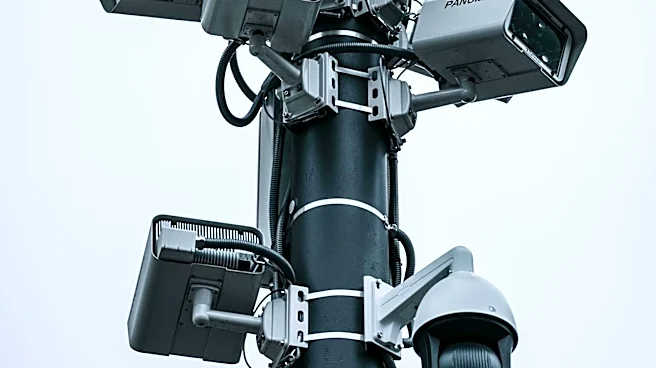
Wake Forest University has installed AI-powered security cameras, some equipped with audio recording capabilities, in and around academic buildings and residential communities on its Reynolda campus and at Wake Downtown. An investigation by the Old Gold
& Black identified three main camera models from Hanwha Vision, along with devices from Axis Communications and Avigilon. While the university states these cameras record video only and are not placed in private settings like classrooms or offices, some models, such as Hanwha's XNF-9013RV and XNF-9010RVM, feature built-in microphones. Faculty members, including history professor Mir Yarfitz and classics professor T. H. M. Gellar-Goad, expressed concerns about academic freedom and privacy, noting that the university did not consult professors before installation. Student Body President Gray Lowder issued a resolution calling for the rejection of AI-powered, privately-owned surveillance systems on campus.
Why It's Important?
The installation of AI-powered cameras with potential audio surveillance capabilities at Wake Forest University raises significant concerns regarding privacy, academic freedom, and the evolving landscape of campus security. For students and faculty, the presence of such technology could create a chilling effect, potentially inhibiting open discussion and expression in academic settings. The lack of prior consultation with faculty and students, as highlighted by professors, suggests a potential disconnect between university administration and its community on critical policy decisions affecting daily life. This situation also underscores a broader national debate about the appropriate use of advanced surveillance technologies in public and semi-public spaces, particularly within educational institutions where intellectual freedom is paramount. The university's assertion that cameras collect video only, despite some models having built-in microphones, fuels skepticism and calls for greater transparency and accountability.
What's Next?
Faculty members have sent a letter, endorsed by 81 named faculty and staff members and seven anonymous signatories, to President Peter Rodriguez, petitioning the university to halt further camera installations. They are requesting discussions with various stakeholders to address potential threats to academic freedom and to receive assurances that microphones will be disabled. The university's Office of Physical Security Technology and Deacon One, which falls under University Police, are responsible for these installations. The Student Government has already passed a resolution against the use of AI-powered surveillance systems. The outcome of these discussions and the university's response to faculty and student concerns will determine the future of surveillance technology on campus and could set a precedent for other educational institutions grappling with similar issues.
Beyond the Headlines
This development at Wake Forest University reflects a growing tension between security measures and individual privacy in the digital age, particularly within academic environments. The integration of AI into surveillance systems introduces complex ethical and legal questions, especially concerning data collection, storage, and potential misuse. The debate extends beyond mere video recording to the implications of AI's ability to analyze and interpret behavior, potentially leading to algorithmic bias or unwarranted scrutiny. The lack of clear, updated policies regarding AI surveillance technology, as noted in the university's 2012 video surveillance policy, highlights a regulatory gap that many institutions face. This situation could prompt a re-evaluation of existing surveillance policies across U.S. universities, pushing for more comprehensive guidelines that address AI capabilities, data governance, and community involvement in decision-making processes.