


What's Happening?
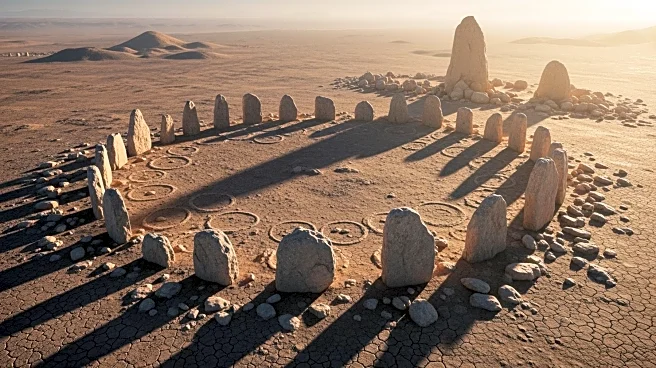
A team of researchers from Ben-Gurion University of the Negev has uncovered at least 28 additional large stone circles near the Bronze Age structure known as Rujm el-Hiri, often referred to as 'Israel's Stonehenge.' Previously, only two such structures
had been recorded. The discovery was made using satellite imagery and environmental analysis, revealing that Rujm el-Hiri is part of a larger array of ancient megalithic structures. These findings suggest that the site, located in the Golan Heights, is not an isolated monument but part of a broader regional phenomenon. The stone circles, constructed from local basalt fieldstones, vary in size, with many exceeding 160 feet in diameter. The research highlights the potential for these structures to have served as ritual gathering places, territorial markers, or seasonal assembly sites for ancient communities.
Why It's Important?
The discovery of additional stone circles around Rujm el-Hiri provides new insights into the social and economic systems of ancient communities in the region. It challenges previous interpretations of the site's function and suggests a more complex network of megalithic structures that played significant roles in the lives of early inhabitants. This research underscores the importance of using advanced technologies like satellite imagery to uncover hidden archaeological features, offering a more comprehensive understanding of historical landscapes. The findings could lead to a reevaluation of other protohistoric monuments in the area, potentially reshaping our understanding of ancient human activities and their environmental interactions.
What's Next?
The research team plans to continue exploring the region using remote sensing technologies to identify and analyze additional megalithic structures. This ongoing work aims to further unravel the historical significance of these sites and their roles in ancient societies. The findings may prompt further archaeological investigations and collaborations to explore the broader implications of these structures on our understanding of early human civilization in the Southern Levant.