



What's Happening?
The United States is urging Israel to take responsibility for clearing the extensive destruction in the Gaza Strip, a result of two years of conflict. This initiative is part of the second phase of a ceasefire agreement aimed at rebuilding Gaza. The United Nations
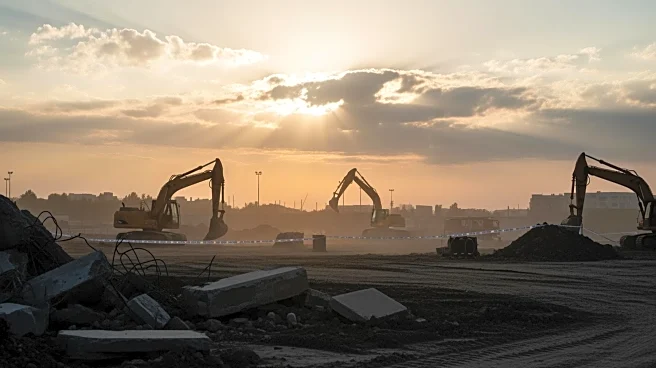
estimates that Gaza is covered with approximately 68 million tons of rubble, equivalent to the weight of 186 Empire State Buildings. The U.S. has proposed deploying an international stabilization force in Gaza by early 2026, with Indonesia and Azerbaijan showing interest in contributing troops. The U.S. is also pressing Israel to begin reconstruction efforts in Rafah, a move intended to attract displaced residents back to the area. However, Israel has stipulated that it will not proceed with the next phase of the ceasefire until the body of hostage Ran Gvili is returned.
Why It's Important?
This development is significant as it highlights the ongoing international efforts to stabilize and rebuild Gaza following prolonged conflict. The U.S. involvement underscores its commitment to facilitating peace and reconstruction in the region. The pressure on Israel to clear the rubble and finance the reconstruction reflects the broader geopolitical dynamics and the role of international diplomacy in conflict resolution. The potential deployment of an international stabilization force could alter the security landscape in Gaza, impacting regional stability. The reconstruction efforts are crucial for the humanitarian situation in Gaza, potentially improving living conditions for its residents.
What's Next?
The next steps involve Israel's compliance with the U.S. request to clear the rubble and the potential deployment of the international stabilization force. The U.S. plans to unveil the Board of Peace, which will oversee Gaza's governance and reconstruction, at the start of 2026. Israeli Prime Minister Benjamin Netanyahu is expected to discuss the ceasefire plan and regional security issues with President Trump at Mar-a-Lago. The outcome of these discussions could influence the pace and scope of reconstruction efforts and the broader peace process in the region.