




What's Happening?
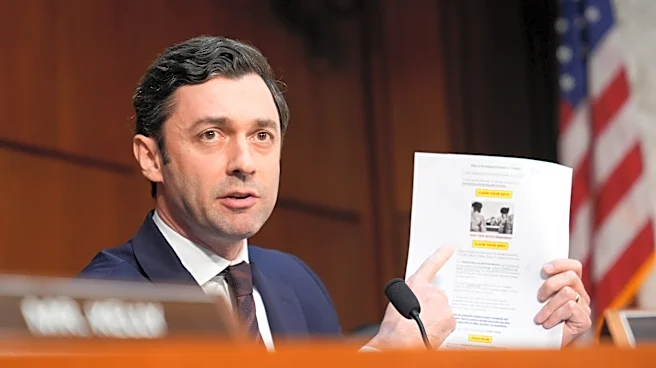
Senator Adam Schiff, a California Democrat, is developing a strategy for Democrats to challenge President Trump, particularly focusing on allegations that the President has enriched himself while in the White House. Schiff, who served as the lead prosecutor
during the first Trump impeachment trial, argues that the cost of President Trump's alleged corruption is a president not focused on the American people's best interests. He emphasizes the importance of connecting corruption to its tangible impact on the public. Schiff also discussed his views on the Israeli government and his proposals for strengthening America's institutional guardrails in a post-Trump era, during an appearance on the 'More To The Story' podcast.
Why It's Important?
Senator Schiff's strategy to highlight alleged corruption by President Trump is significant as it aims to shape public discourse and potentially influence future political campaigns. By focusing on the 'cost of corruption' to the American people, Schiff seeks to make the issue resonate more broadly with voters. This approach could be a key element in how Democrats position themselves against President Trump in upcoming elections, aiming to draw a clear contrast in leadership and priorities. The discussion also touches on the broader implications for democratic institutions, suggesting a need for reforms to prevent future abuses of power and ensure accountability. His proposals for rebuilding institutional guardrails reflect a concern for the long-term health of American governance.
What's Next?
Senator Schiff's outlined strategy suggests that corruption and the President's personal enrichment will likely remain central themes in Democratic political messaging leading up to future elections. This focus could lead to increased investigations, public hearings, and legislative efforts aimed at strengthening ethics laws and financial transparency for public officials. The emphasis on the 'cost of corruption' may also influence how media outlets cover the President's actions and how the public perceives the intersection of business and politics. Furthermore, Schiff's comments on rebuilding institutional guardrails indicate a potential push for reforms designed to reinforce checks and balances within the government, regardless of who occupies the White House.
Beyond the Headlines
Beyond the immediate political implications, Senator Schiff's focus on corruption touches upon deeper questions about the integrity of public service and the erosion of trust in government. The idea that a president might prioritize personal gain over public duty can undermine the foundational principles of democracy and create a cynical view of political leadership. This narrative could contribute to a broader societal debate about ethical governance, the role of money in politics, and the need for robust oversight mechanisms. The long-term impact could be a re-evaluation of presidential ethics guidelines and a renewed push for transparency to restore public confidence in governmental institutions. The discussion also implicitly raises questions about the effectiveness of existing checks and balances in preventing such alleged conduct.