



What's Happening?
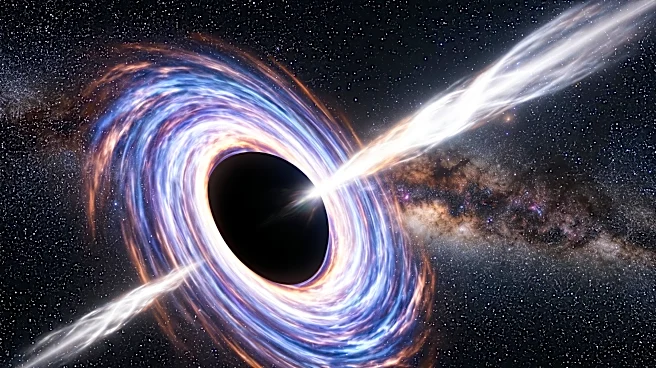
A new study explores the Penrose process as a method to extract energy from black holes, specifically focusing on rotating black holes. This process, initially proposed by Roger Penrose in 1969, suggests that energy can be directly siphoned from a black hole,
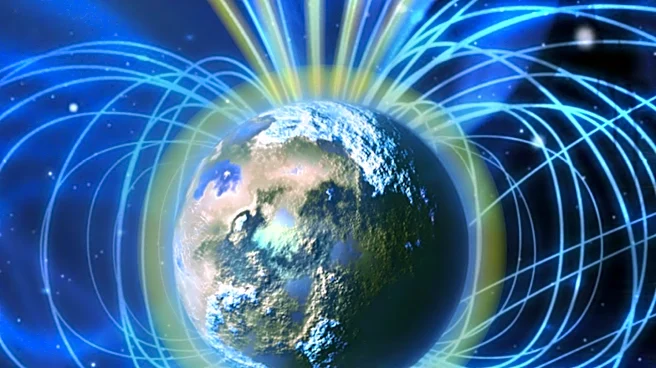
leading to a decrease in its mass. Unlike the typical energy generation from black holes through the consumption of matter, the Penrose process leverages the black hole's ergosphere—a region where space-time is dragged by the black hole's rotation. The study posits that if an object, such as a spaceship, enters the ergosphere and discards mass, the discarded mass spirals into the black hole with 'negative' energy, while the spaceship gains a boost in speed and energy. Variations of this process, particularly those involving magnetic fields, are theorized to be highly efficient. The research further investigates this concept by considering a neutron within the ergosphere of Sagittarius A*, the black hole at the center of the Milky Way. The neutron's decay into a proton, electron, and neutrino, with the electron being discarded, could provide an energy kick to the proton, which then interacts with the magnetic field in the ergosphere through the magnetic Penrose process (MPP). This could generate protons with energies in the PeV range, significantly more powerful than those produced by the Large Hadron Collider.
Why It's Important?
This research holds significant implications for our understanding of black hole physics and the potential for energy generation in extreme cosmic environments. If the Penrose process, particularly its magnetic variations, proves viable, it could revolutionize theoretical astrophysics by demonstrating a mechanism for black holes to lose mass and energy directly, rather than solely gaining it. The potential to generate particles with PeV-range energies from a black hole's ergosphere opens new avenues for studying high-energy phenomena in the universe. Such energetic particles could produce observable gamma rays and neutrinos, offering a multi-messenger signal that could be detected by advanced observatories. This would provide empirical evidence for a process that has, until now, remained largely theoretical. The study's focus on Sagittarius A* makes these theoretical predictions directly relevant to observations within our own galaxy, potentially leading to a deeper understanding of the dynamics and energy output of supermassive black holes.
What's Next?
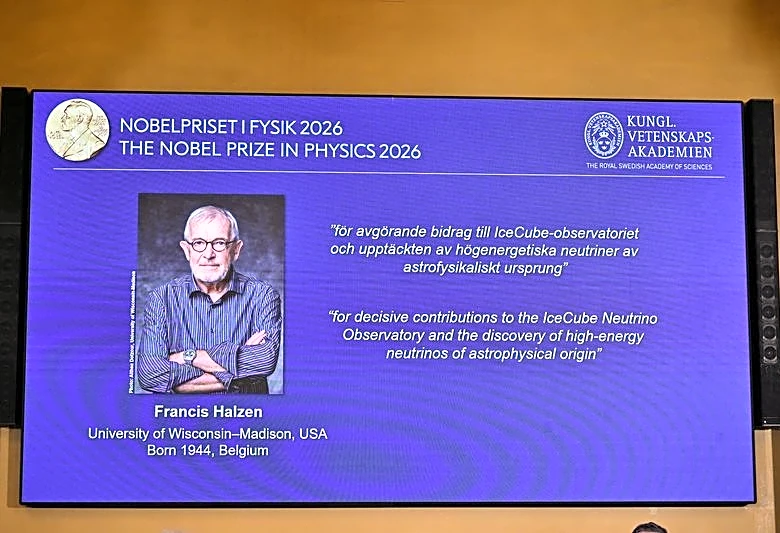
The immediate next steps involve the search for observational evidence to confirm the predictions of the magnetic Penrose process. While the gamma ray and neutrino signals predicted by the study are currently too faint for existing technology, upgraded versions of observatories like the High-Altitude Water Cherenkov (HAWC) observatory and the new IceCube Neutrino Observatory in Antarctica are expected to have the capability to detect them. The detection of these multi-messenger signals—light and neutrinos—would provide crucial proof of the Penrose process and confirm that black holes can indeed lose mass. This would mark a significant advancement in astrophysics, moving the concept from theoretical possibility to observed reality. Future research will likely focus on refining the theoretical models and collaborating with observational astronomers to identify the specific signatures that these advanced observatories should look for, potentially leading to groundbreaking discoveries about black hole energy dynamics.
Beyond the Headlines
Beyond the immediate scientific implications, the concept of extracting energy from black holes, even theoretically, sparks profound questions about the ultimate limits of energy sources in the universe. While the current study focuses on natural processes and their observable signatures, the underlying principle of the Penrose process could, in a highly speculative future, inspire novel approaches to energy generation or propulsion, albeit on scales far beyond current technological capabilities. It also highlights the intricate interplay between gravity, electromagnetism, and quantum mechanics in extreme cosmic environments, pushing the boundaries of our physical understanding. The idea that black holes, often perceived as cosmic vacuum cleaners, could also be sources of immense energy, challenges conventional notions and underscores the universe's complexity. This research contributes to a broader scientific endeavor to unravel the mysteries of black holes, which are central to galaxy formation and evolution, and to understand the fundamental laws governing the cosmos.