






What's Happening?
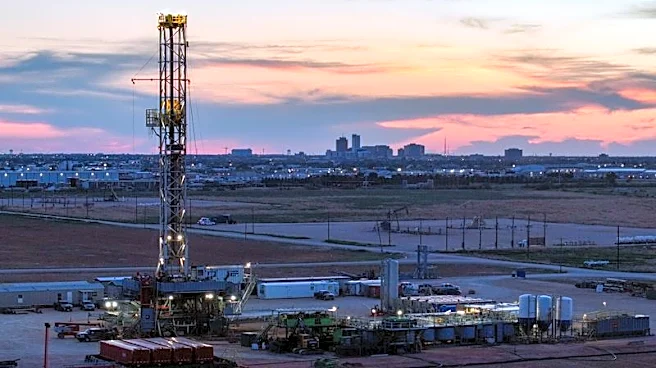
In 1945, the first nuclear bomb test, known as the Trinity explosion, was conducted in New Mexico, resulting in the formation of a unique type of glass called trinitite. Recently, researchers have discovered that some red trinitite contains previously
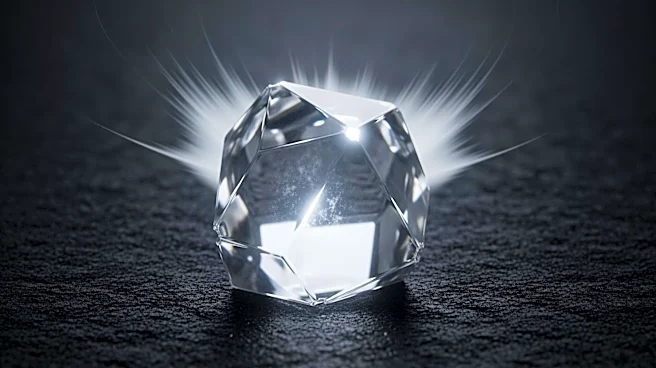
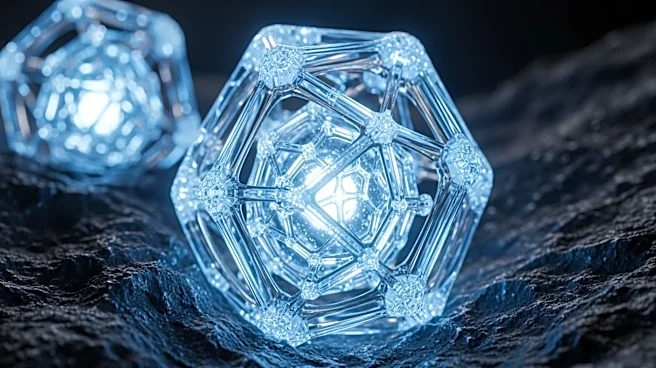
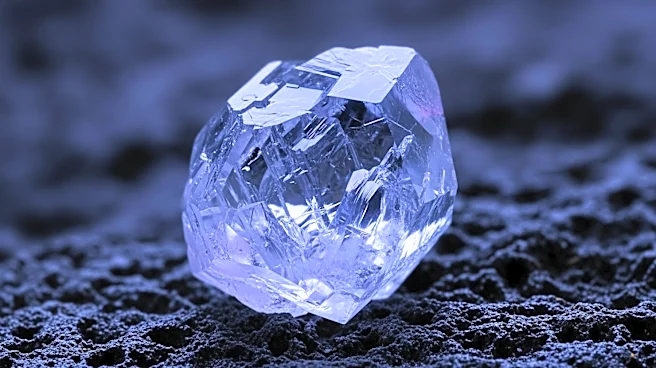
unknown crystals. These crystals, identified as clathrate structures, were formed under the extreme conditions of the nuclear blast, which included temperatures exceeding 2,700 degrees Fahrenheit and pressures reaching 8 gigapascals. The study, published in the journal PNAS, highlights the presence of silicon-rich quasicrystals and clathrate crystals, which are rare in nature. The findings provide new insights into mineral formation under extreme conditions.
Why It's Important?
The discovery of these unique crystals expands scientific understanding of how matter behaves under extreme conditions, such as those created by nuclear explosions. This research could have implications for various fields, including materials science and geology, by providing a deeper understanding of mineral formation processes. The study also highlights the potential for discovering new materials with unique properties that could be applied in technology and industry. Furthermore, it underscores the historical significance of the Trinity test and its ongoing impact on scientific research.