
What's Happening?
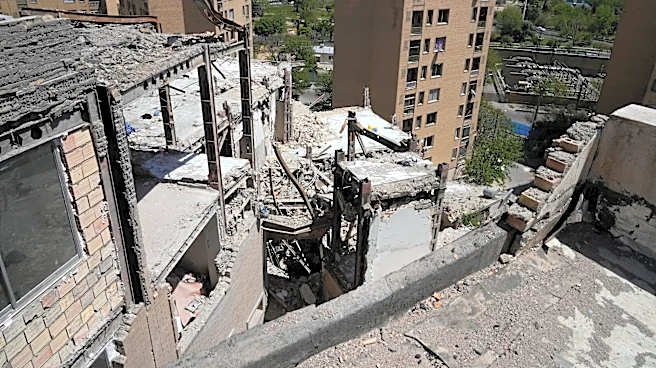
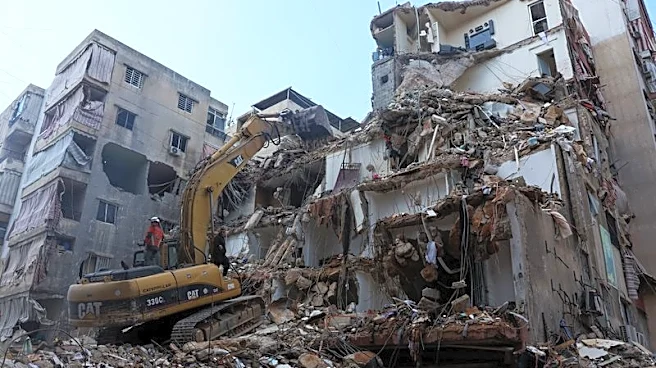
Lebanon and Israel have initiated their first direct diplomatic talks in over 30 years, facilitated by the United States in Washington. This development follows a month-long conflict between Israel and Hezbollah,
a militant group backed by Iran. U.S. Secretary of State Marco Rubio described the talks as a 'historic opportunity,' though he cautioned against expecting immediate breakthroughs. The discussions, which lasted two hours, were praised by the U.S. State Department for their productivity in moving towards direct negotiations. Despite Hezbollah's opposition and absence from the talks, the Lebanese government expressed a strong desire to end the conflict, emphasizing territorial integrity and sovereignty. The talks occur against a backdrop of ongoing hostilities, with Hezbollah continuing to launch attacks on northern Israel.
Why It's Important?
The direct talks between Lebanon and Israel are significant as they represent a potential shift in the longstanding conflict between the two nations, which have been officially at war since 1948. The involvement of the U.S. as a facilitator underscores the international community's interest in stabilizing the region. A successful negotiation could lead to a reduction in hostilities and pave the way for broader peace efforts in the Middle East. However, the absence of Hezbollah from the talks and its continued aggression highlight the complexities involved in achieving a lasting resolution. The outcome of these talks could influence regional power dynamics, particularly concerning Iran's influence through Hezbollah.
What's Next?
The next steps involve continued diplomatic engagement, with the U.S. likely playing a central role in mediating further discussions. Both Lebanon and Israel will need to address internal and external pressures, including Hezbollah's stance and Iran's regional ambitions. The potential for a ceasefire or peace agreement will depend on the willingness of both parties to compromise and the ability of international actors to facilitate a conducive environment for negotiations. The situation remains volatile, with ongoing military actions posing a risk to the peace process.