







What's Happening?
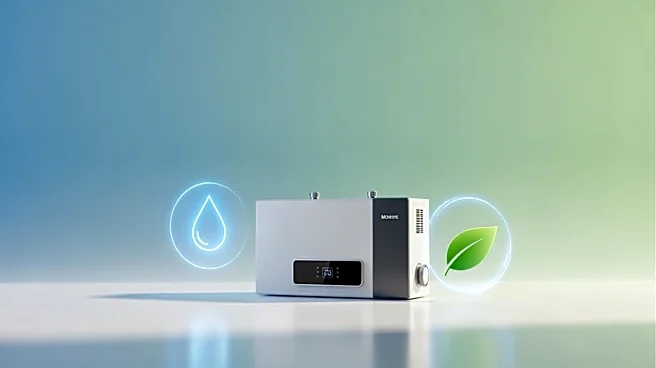
A recent analysis highlights the potential health and economic benefits of switching from fossil fuel-based water heaters to heat pump water heaters (HPWHs). Fossil fuel water heaters, which burn natural gas, propane, or fuel oil, release pollutants such
as sulfur dioxide (SO2), nitrogen oxides (NOx), and particulate matter (PM2.5) into the air. These emissions contribute significantly to air pollution, particularly in areas like the Bay Area Air District, where gas water heaters and furnaces are the largest source of NOx emissions. HPWHs, on the other hand, emit significantly less CO2 and other pollutants, making them a cleaner alternative. The transition to HPWHs could reduce premature mortality by 700 lives annually and save an estimated $8.4 billion in health-related costs.
Why It's Important?
The shift to heat pump water heaters represents a significant opportunity to improve public health and reduce healthcare costs. By reducing emissions of harmful pollutants, HPWHs can help decrease respiratory and cardiovascular issues linked to air pollution. This transition also aligns with broader environmental goals, as HPWHs contribute to lower carbon emissions, supporting efforts to combat climate change. The economic savings from reduced healthcare costs and improved air quality could be substantial, benefiting both individuals and the healthcare system. Additionally, the widespread adoption of HPWHs could stimulate the market for clean energy technologies, promoting innovation and job creation in the green energy sector.
What's Next?
As awareness of the benefits of HPWHs grows, policymakers and industry leaders may push for incentives and regulations to encourage their adoption. This could include subsidies for homeowners to replace existing fossil fuel-based water heaters with HPWHs, as well as stricter emissions standards for new water heaters. The success of such initiatives will depend on collaboration between government agencies, environmental organizations, and the private sector. Continued research and public education campaigns will be crucial in driving consumer demand and ensuring a smooth transition to cleaner water heating technologies.