
What's Happening?
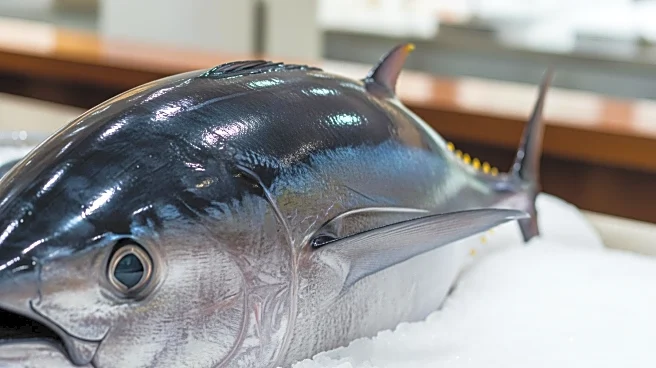
A bluefin tuna weighing 243 kilograms (535 pounds) was sold for a record 510 million yen ($3.2 million) at the first auction of 2026 at Tokyo's Toyosu fish market. The top bidder was Kiyomura Corp., owned
by Kiyoshi Kimura, who runs the Sushi Zanmai chain. Kimura, a frequent winner of the annual auction, surpassed his previous record of 334 million yen ($2.1 million) set in 2019. The auction, which began with the ringing of a bell, featured rows of torpedo-shaped fish with their tails cut off, allowing bidders to inspect the meat's color, texture, and fattiness. The tuna was caught off the coast of Oma in northern Japan, known for producing high-quality tuna. The price per kilogram was 2.1 million yen ($13,360), or $6,060 per pound. Kimura expressed that while he hoped to pay less, the price escalated quickly. The auction is a traditional event, with prices for Oma tuna particularly high during the New Year auction.
Why It's Important?
The sale of the bluefin tuna at such a high price highlights the cultural and economic significance of tuna in Japan, particularly for sushi and sashimi. The auction reflects the ongoing demand for high-quality seafood, which can drive up prices significantly. This event also underscores the recovery of Pacific bluefin tuna stocks, which were previously threatened by overfishing and climate change. Conservation efforts have been crucial in stabilizing the population, allowing for such high-profile sales. The auction not only sets a new record but also draws attention to the delicate balance between commercial fishing and sustainable practices. The high price paid for the tuna can influence market trends and consumer expectations, potentially impacting the fishing industry and conservation policies.
What's Next?
Future auctions may see continued high prices for premium tuna, especially if demand remains strong. The fishing industry might experience increased pressure to maintain sustainable practices to ensure the continued recovery of tuna stocks. Stakeholders, including environmental groups and regulatory bodies, may push for stricter conservation measures to prevent overfishing. Additionally, the high-profile nature of such auctions could lead to increased scrutiny of fishing practices and the environmental impact of the seafood industry. As the market for luxury seafood grows, there may be further developments in aquaculture and alternative methods to meet demand without depleting natural resources.