

What's Happening?
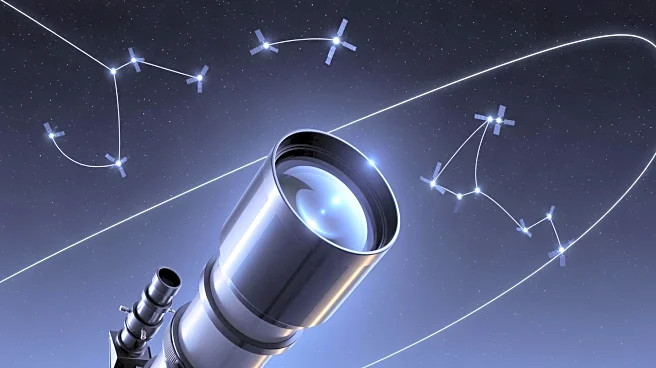
A NASA study reveals that satellite constellations in low Earth orbit (LEO) are increasingly interfering with space telescopes like Hubble, potentially rendering up to 40% of its images unusable. The growing number of satellites, particularly from SpaceX's
Starlink, is causing light pollution that affects astronomical observations. NASA suggests solutions such as designing darker satellites and coordinating deployment heights to mitigate the impact. The issue is expected to worsen as more satellites are launched, posing challenges for future space-based experiments and observations.
Why It's Important?
The interference of satellite constellations with space telescopes is a significant concern for the scientific community, as it threatens the accuracy and reliability of astronomical data. The potential loss of usable images from Hubble and other telescopes could hinder scientific research and discoveries. Addressing this issue is crucial for preserving the integrity of space-based observations and ensuring the continued advancement of astronomy. The situation highlights the need for collaboration between satellite operators and astronomers to find sustainable solutions that allow both technologies to coexist without compromising scientific progress.