


What's Happening?
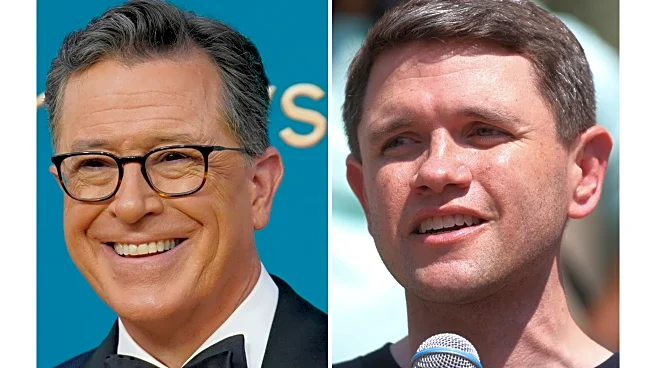
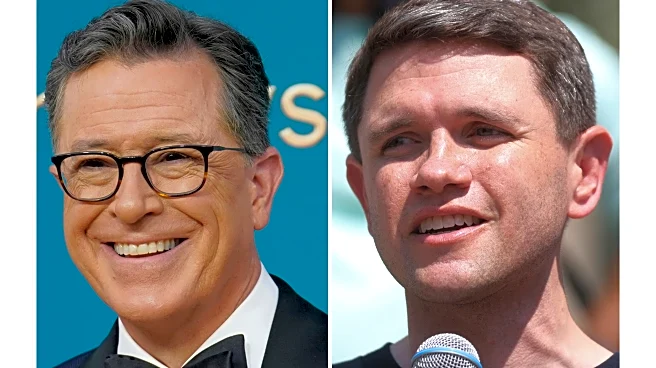
Stephen Colbert, host of 'The Late Show,' publicly criticized CBS for preventing an interview with Texas State Representative James Talarico from airing. Colbert explained that CBS's decision was influenced by new FCC guidance requiring equal airtime
for opposing political candidates on talk shows. Although the interview was not broadcast on television, it was made available on YouTube, where FCC rules do not apply. CBS stated that the decision was based on legal advice to avoid triggering the FCC's equal-time rule, which mandates equal opportunities for all candidates running for the same office. The rule exempts bona fide newscasts and interviews but applies to other programming. FCC Commissioner Anna Gomez expressed disappointment over CBS's decision, emphasizing the importance of airing newsworthy content.
Why It's Important?
This incident highlights the tension between media networks and regulatory bodies over political content. The FCC's equal-time rule aims to ensure fair media representation for political candidates, but its application to entertainment programs like 'The Late Show' raises questions about the balance between regulatory compliance and editorial freedom. The decision by CBS to withhold the interview underscores the influence of legal and political considerations on media content. This situation also reflects broader concerns about media bias and the role of corporate interests in shaping public discourse. The controversy may impact public perception of media neutrality and the integrity of political coverage.
What's Next?
As the primary elections approach, media networks may face increased scrutiny over their compliance with FCC regulations. The controversy could prompt discussions about the scope of the equal-time rule and its application to non-news programming. Political candidates and media outlets might seek clarity on the rule's enforcement to avoid similar disputes. Additionally, the incident could influence future FCC policy decisions, particularly regarding the regulation of political content on entertainment platforms. Stakeholders, including political leaders and media organizations, may advocate for revisions to the rule to better align with contemporary media practices.