






What's Happening?
China and Russia are deepening their maritime cooperation, particularly in the Arctic region, with proposals to link China's Maritime Silk Road with Russia's Trans-Arctic Transport Corridor. This collaboration, highlighted by Russian President Vladimir
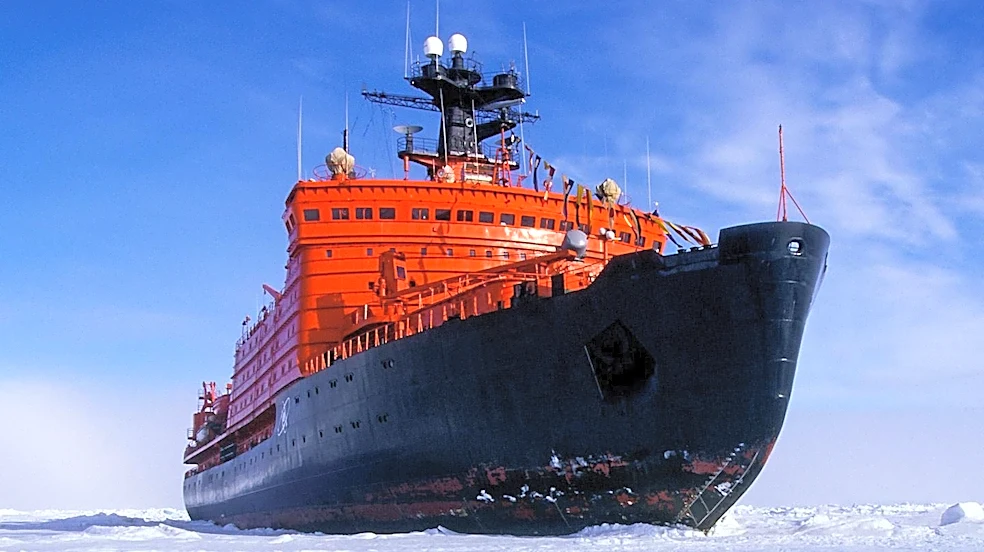
Putin’s advisor Nikolai Patrushev's recent visit to China, aims to develop Russian ports, exchange container-terminal automation technology, and conduct joint maritime research. The economic logic behind this initiative is clear, as China is Russia's largest trading partner, and Russia is a significant supplier of energy and raw materials to China. This partnership seeks to build redundancy into trade routes and secure supply chains, potentially reducing reliance on traditional chokepoints like the Suez Canal. The Northern Sea Route (NSR) in the Arctic, despite its challenges, is gaining geopolitical and geoeconomic significance, with record cargo traffic reported in 2024.
Why It's Important?
This burgeoning Arctic axis between China and Russia has significant geopolitical implications, particularly for the United States and its allies. A more integrated Russian-Chinese maritime system could complicate the strategic picture for countries like Japan, given increasing Chinese-Russian military activity around its territory. For Taiwan, while the significance is indirect, Beijing's maritime pressure already includes naval activity and other gray-zone coercion, and Russia's contribution to a broader Chinese maritime ecosystem could encourage China to believe that disruptions in one theater might not cripple its broader trade and energy flows. The securitization of supply chains and the opening of the Arctic are reshaping the global economy, and this partnership could lead to a fragmentation of the global maritime system into competing networks, potentially impacting international trade standards and security arrangements.
What's Next?
The proposals discussed are still largely in the planning stages, but the intent is to move towards concrete infrastructure, technology, and logistics development. This will likely involve Chinese investment in Russian Arctic projects, direct container links, and the sharing of digital expertise in port automation. The geopolitical implications will continue to be closely monitored by Washington, which already views the Arctic as an arena of intensifying strategic competition. The U.S. Coast Guard has reported increased Chinese-affiliated research vessels and joint Chinese Coast Guard-Russian Border Guard patrols in the U.S. Arctic. While not necessarily a military alliance, the joint work on ports, digital systems, shipbuilding, and research could enhance the strategic utility of their maritime infrastructure in a crisis, prompting further responses from Western nations.
Beyond the Headlines
The deeper implications of this Arctic cooperation extend to the very architecture of global trade and power. By developing a parallel maritime system, China and Russia are not just seeking commercial efficiency but also geopolitical security in an era of increasing supply chain vulnerabilities. The focus on port automation, digital shipyards, and common technical standards suggests a long-term vision to control the software, data, equipment, and logistics of maritime trade, which could allow them to shape global commerce without direct military confrontation. This development challenges the existing global maritime order and could lead to a more fragmented system with different technological and security standards. The West faces the challenge of understanding and responding to this evolving strategic partnership, which combines economic and security objectives in a complex and integrated manner.