






What's Happening?
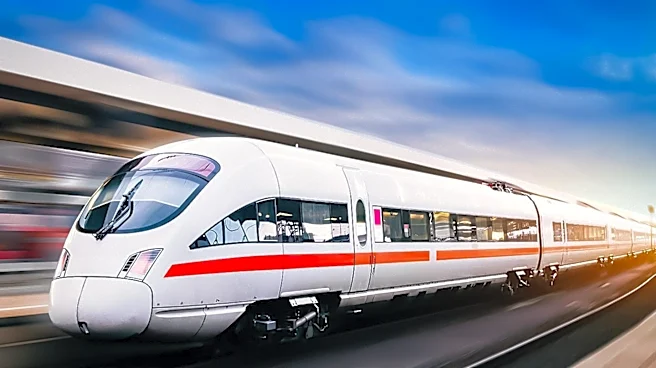
Amtrak's Acela Express provides the quickest rail connection between Boston and New York City, reducing travel time to approximately three and a half hours. This high-speed service operates on a dedicated corridor, linking major financial and cultural
hubs along the Northeast Corridor, including Boston, New York City, Philadelphia, Baltimore, and Washington, D.C. The Acela trains utilize advanced signaling and a tilting mechanism, which allows them to maintain higher speeds on curved sections of track, contributing to a smoother and faster journey. The route incorporates upgraded legacy lines and purpose-built high-speed segments, particularly between New Haven and New York, where trains often reach their top operating speeds. This infrastructure investment aims to transform the Northeast Corridor into a competitive rail link, offering a viable alternative to short-haul flights and driving by prioritizing speed and predictability for time-sensitive travelers.
Why It's Important?
The Acela Express plays a crucial role in connecting key economic and cultural centers in the Northeast, facilitating business commutes and tourism. Its efficiency and speed make it a competitive option against air and road travel, especially when considering airport security, transit times, and traffic congestion. For businesses, the Acela provides a productive environment for travelers, allowing them to work uninterrupted between cities, which can outweigh the higher fare. Environmentally, rail travel on the Acela generates significantly lower carbon emissions per passenger mile compared to driving or flying, aligning with broader goals for sustainable transportation and contributing to reduced congestion and emissions in the region. The service also supports regional economic resilience by fostering face-to-face collaboration between the technology and education sectors in Boston and the finance, media, and legal industries in New York.
What's Next?
Amtrak plans to enhance the Acela service through equipment refreshes, increased frequencies, and further integration of digital tools for booking and real-time updates. Newer trainsets are expected to improve reliability and the overall passenger experience, leveraging the existing corridor principles. These enhancements aim to broaden the appeal of the Boston to New York journey to a wider audience. Continued investment in signaling, track upgrades, and station facilities will be critical to meet growing demand without compromising the service's primary advantage of swift and dependable travel between these vital Northeast cities. As regional policies increasingly prioritize lower-carbon travel, the Acela is positioned to become an even more central asset in the transportation network.
Beyond the Headlines
The Acela Express represents more than just a mode of transportation; it embodies a strategic investment in regional connectivity and sustainable infrastructure. Its success highlights the potential for high-speed rail to reshape urban planning and economic development in densely populated corridors. The emphasis on comfort and productivity onboard reflects a shift in traveler expectations, where the journey itself becomes an extension of the workday or leisure time. Furthermore, the Acela's environmental benefits underscore a broader societal move towards greener transportation solutions, influencing policy decisions and consumer choices. The ongoing evolution of the Acela service could serve as a model for future intercity rail projects, demonstrating how technological advancements and strategic planning can create efficient, comfortable, and environmentally responsible travel options.