





What's Happening?
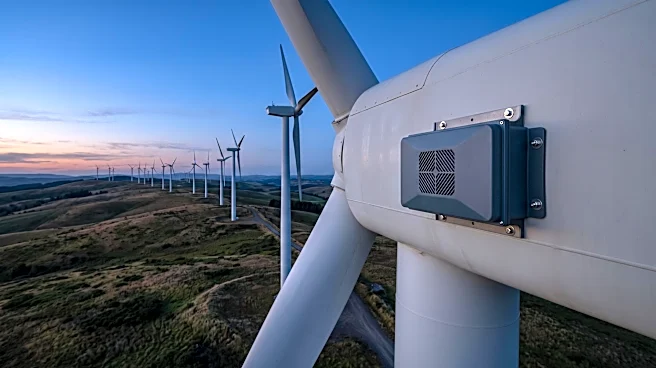
The Department of Energy (DOE) has reported that a Bat Deterrent System (BDS) developed by NRG Systems has significantly reduced bat fatalities at wind farm turbines. This system utilizes ultrasonic speakers that produce sounds between 20 kHz and 50 kHz,
frequencies imperceptible to humans but well within the hearing range of most bats. These ultrasonic tones are louder than the chirps bats use for echolocation, effectively drowning out their navigation signals. This disruption convinces bats to avoid the area around wind turbines. According to the DOE, this deterrent method has reduced the fatality rate of bats colliding with wind farm turbines by 50% to 78%.
Why It's Important?
The success of the Bat Deterrent System addresses a critical environmental concern associated with wind energy development: wildlife mortality, particularly for bats. While wind turbines cause fewer bird deaths than other human activities, bat collisions remain a significant issue for conservation efforts and the ecological balance. Bats play vital roles in ecosystems, including insect control and pollination. By substantially reducing bat fatalities, this technology helps mitigate the environmental impact of wind farms, making renewable energy more sustainable and acceptable. This development is crucial for the continued expansion of wind energy infrastructure, as it provides a viable solution to a long-standing ecological challenge, balancing energy needs with wildlife protection.
What's Next?
The reported success of the Bat Deterrent System suggests a potential for wider adoption across existing and future wind farms. Further research and development may focus on optimizing these ultrasonic deterrents, potentially exploring different frequency ranges or deployment strategies to maximize effectiveness and minimize any unintended ecological consequences. The development of similar technologies for other wildlife, such as birds, could also be explored. This positive outcome may encourage more investment in eco-friendly technologies within the renewable energy sector, fostering a more harmonious coexistence between energy production and biodiversity conservation. Continued monitoring and data collection will be essential to confirm long-term efficacy and refine the technology.
Beyond the Headlines
This technological advancement highlights the growing intersection of renewable energy and ecological engineering. It demonstrates that with targeted research and innovation, it is possible to address environmental trade-offs associated with green technologies. The 'silent' nature of these speakers, imperceptible to humans, underscores the sophisticated understanding of animal behavior and sensory perception being applied in conservation. This approach could set a precedent for how future infrastructure projects are designed, integrating wildlife protection from the outset. It also raises broader questions about the ethical responsibilities of energy developers to minimize their ecological footprint and the role of government agencies like the DOE in funding and validating such solutions.