


What's Happening?
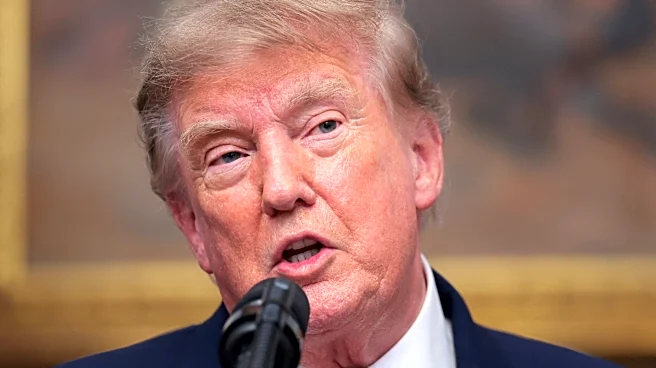
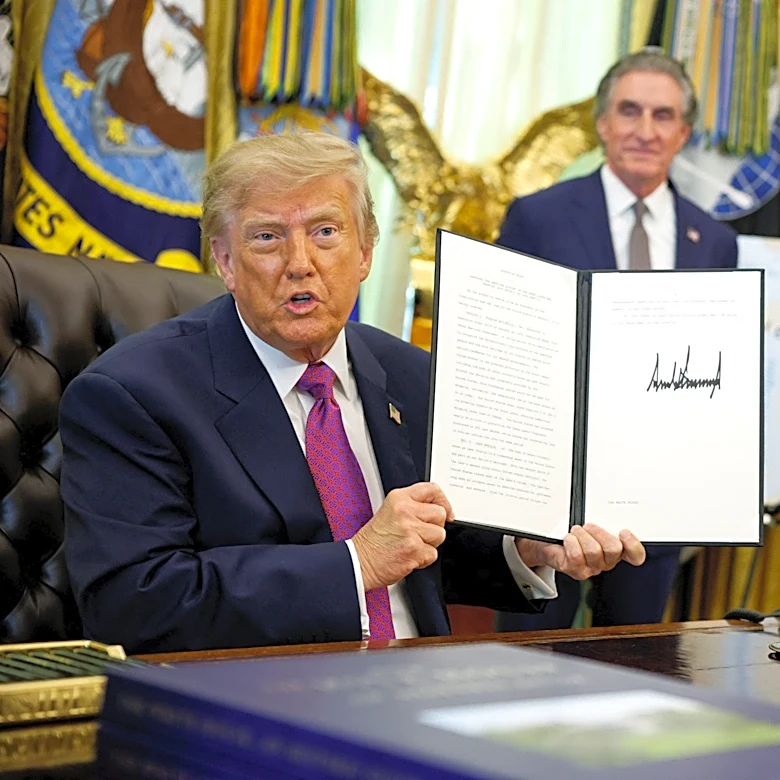
U.S. District Court Judge Indira Talwani has lifted restrictions that prevented the U.S. Postal Service (USPS) from implementing President Trump’s executive order on mail voting. This decision, made on Wednesday, allows the administration to proceed with
the order while a legal challenge to its constitutionality continues. Judge Talwani's action followed a U.S. Supreme Court ruling two days prior, which invalidated a separate injunction she had issued against the order. The Supreme Court's reasoning was that the injunction was premature, as the USPS had not yet published a final rule implementing the executive order. With the USPS now having formally published its rule, the legal landscape has shifted, making the rule ripe for challenges on its merits. Voting rights groups and Democratic-led states are renewing their efforts to block the rule, arguing it violates the Constitution's separation of powers and federal laws governing USPS operations.
Why It's Important?
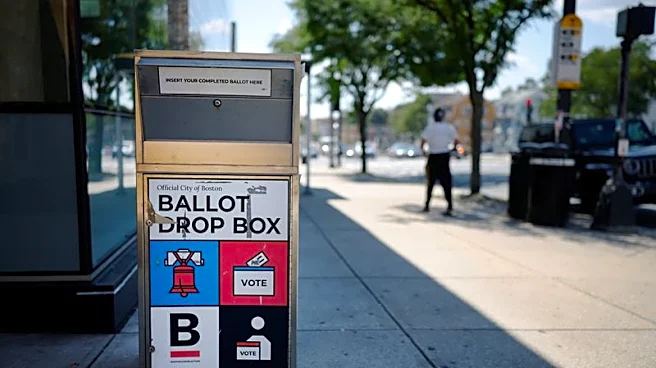
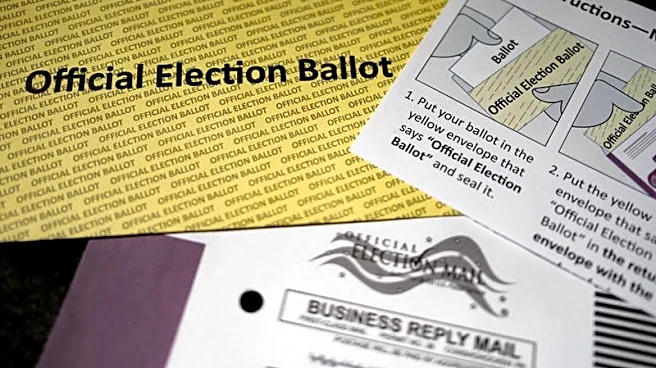
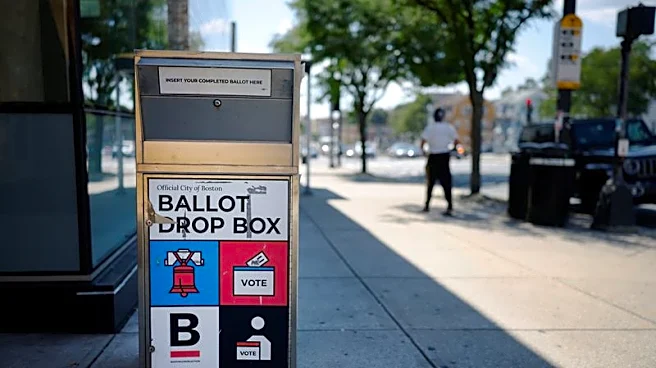
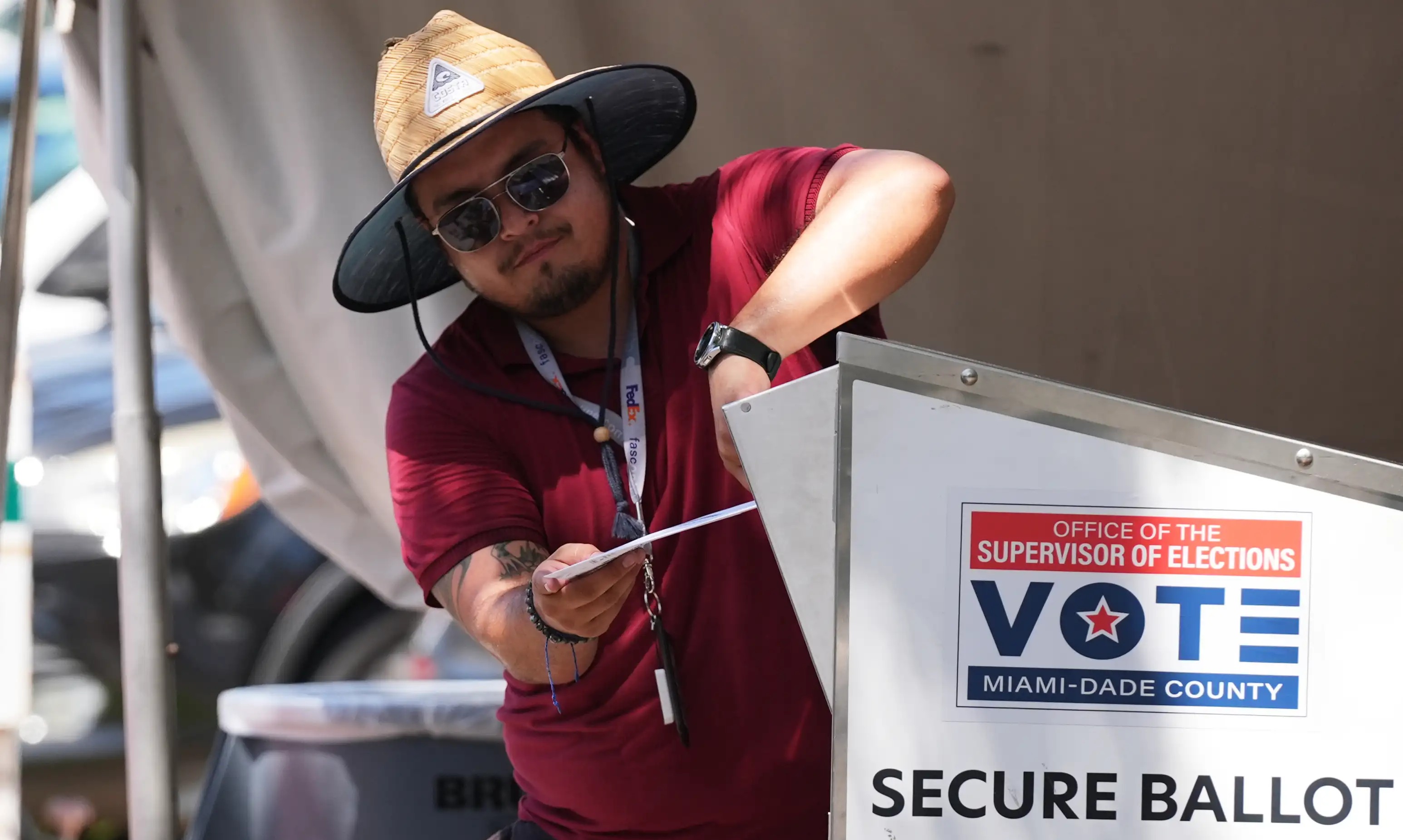
This development is crucial for the upcoming midterm elections, as it introduces uncertainty regarding mail-in voting procedures. President Trump's executive order, which directs the USPS to deliver mail ballots only to pre-approved lists using specific envelopes with barcodes, could significantly impact how millions of Americans cast their votes. The legal battle highlights a fundamental dispute over who has the authority to regulate elections: the states and Congress, or the executive branch. If the USPS rule is implemented, it could create new logistical challenges for states, potentially requiring them to purchase new equipment and retrain staff, all while facing a tight deadline before the elections. The outcome of these legal challenges will determine the accessibility and integrity of mail-in voting, affecting voter participation and potentially influencing election results. The Supreme Court's procedural ruling, while not addressing the merits, emphasizes the importance of final rules in legal challenges.
What's Next?
With the USPS's final rule now published, voting rights organizations and Democratic-led states are expected to intensify their legal challenges. Plaintiffs, including the League of Women Voters of Massachusetts, have already supplemented their complaints to directly challenge the newly finalized rule, seeking immediate emergency relief to block its implementation before the November midterm elections. A new lawsuit has also been filed by Democratic states, including California and Hawaii, requesting a temporary restraining order. These legal actions will focus on the constitutionality of President Trump's order and the USPS rule, arguing that they usurp the authority of states and Congress in election administration. The courts will need to quickly adjudicate these claims, as the timeline for the midterm elections is rapidly approaching. The ongoing legal saga means election officials and voters may not have a definitive answer on mail voting procedures until very close to Election Day, potentially leading to confusion.
Beyond the Headlines
The legal struggle over President Trump's mail voting order delves into deeper questions about the balance of power within the U.S. government and the sanctity of the electoral process. The administration's reliance on procedural arguments rather than defending the order on its merits, as noted by Justice Ketanji Brown Jackson, raises concerns about the executive branch's potential overreach into election regulation. This situation underscores the vulnerability of election systems to political maneuvering and the critical role of the judiciary in safeguarding democratic principles. The debate also highlights the broader implications of federal agencies, like the USPS, becoming entangled in partisan disputes, potentially eroding public trust in their neutrality and operational independence. The outcome could set precedents for future executive actions concerning elections and the extent to which federal entities can dictate state-level electoral processes.