
What's Happening?
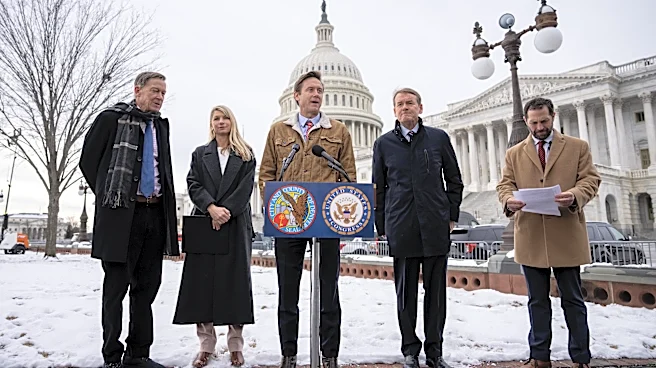
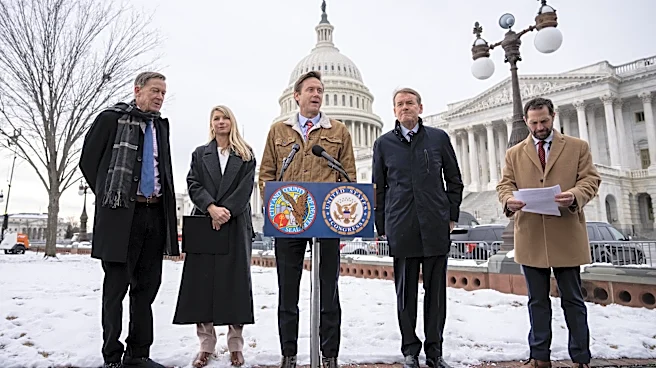
The U.S. Senate has unanimously passed the FORECAST Act, introduced by Senator Jerry Moran (R-Kan.), as part of the broader Weather Research and Forecasting Innovation Reauthorization Act of 2026, also
known as the 'Weather Act.' This legislation specifically exempts certain National Weather Service (NWS) employees from any executive order or memorandum imposing a hiring freeze. The exempted roles are critical for issuing weather and flood warnings, maintaining essential observational equipment, and protecting life and property. Senator Moran, a member of the Senate Committee on Commerce, Science, and Transportation, initiated this bill over a year ago to enhance weather warnings and safety measures. The bill's passage follows his previous efforts to secure a federal hiring-freeze exemption for the NWS to address staffing shortages, particularly at the NWS office in Goodland, Kansas, which previously relied on temporary rotations of employees from other offices.
Why It's Important?
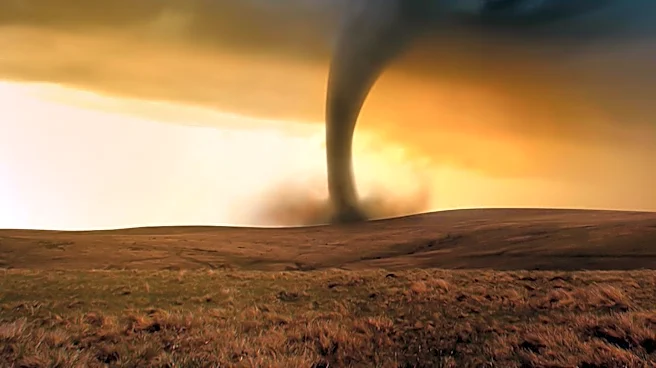
The unanimous passage of the FORECAST Act is significant for national safety and economic stability, particularly in regions heavily reliant on accurate weather data. By exempting key NWS personnel from hiring freezes, the legislation ensures that critical functions like issuing weather and flood warnings and maintaining observational equipment remain fully staffed and operational. This directly impacts public safety by providing timely information for natural disaster preparedness and response. For sectors such as agriculture, exemplified by Kansan farmers and ranchers, reliable weather data is crucial for daily operations and economic viability. Staffing shortages at NWS offices, as seen in Goodland, can compromise the accuracy and timeliness of forecasts, leading to potential economic losses and increased risks to life and property. The 'Weather Act,' encompassing the FORECAST Act, also aims to upgrade forecasting technology, including radar and satellite modernization, further enhancing the nation's ability to predict and respond to severe weather events.
What's Next?
The FORECAST Act, now passed by the Senate, will proceed as part of the Weather Research and Forecasting Innovation Reauthorization Act of 2026. The next step involves its potential passage through the House of Representatives and subsequent enactment into law. If signed, the legislation will provide a permanent solution to staffing challenges at the National Weather Service by preventing future hiring freezes from impacting essential personnel. This will allow the NWS to maintain and potentially expand its workforce responsible for critical weather forecasting and warning services. The broader 'Weather Act' will also facilitate ongoing upgrades to forecasting technology and strengthen programs focused on public safety and communication, leading to improved natural disaster preparedness across the U.S. Stakeholders, including agricultural communities and emergency management agencies, will likely benefit from more consistent and reliable weather information.
Beyond the Headlines
The FORECAST Act's passage highlights a broader recognition of the essential, often overlooked, role of federal agencies like the National Weather Service in national infrastructure and public well-being. The bipartisan support for this bill underscores a consensus on the importance of scientific expertise and continuous operational capacity in areas directly affecting public safety and economic sectors. It also subtly addresses the tension between broad governmental cost-cutting measures, such as hiring freezes, and the specific, non-negotiable needs of critical services. The focus on exempting specific roles suggests a more nuanced approach to federal workforce management, prioritizing functions that directly protect life and property. This legislative action could set a precedent for other critical federal agencies to seek similar exemptions, ensuring that vital services are not compromised by blanket administrative policies.