








What's Happening?
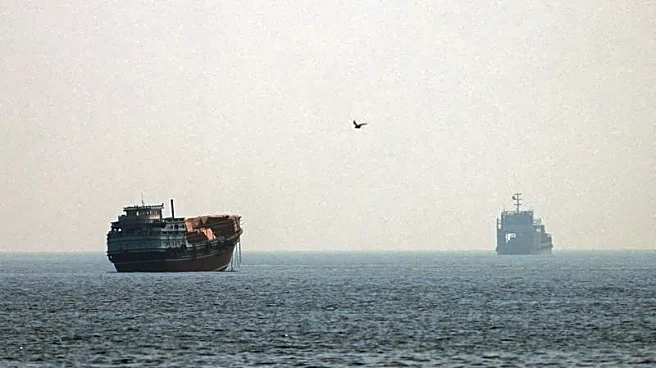
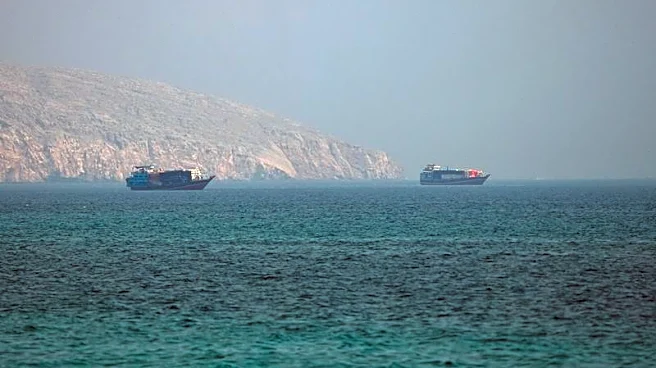
Oman has issued a strong statement reaffirming its commitment to free passage navigation in the Strait of Hormuz, following recent tensions and attacks on commercial ships. The statement, made at the International Maritime Organization headquarters, emphasized
that transit passage through international straits is guaranteed under international law. Oman rejected the imposition of transit fees, a point of contention in discussions with Iran. The statement follows a series of attacks on ships in Omani territorial waters, which have heightened regional tensions. Oman's Foreign Minister, Sayyid Badr Al Busaidi, clarified that any agreements with Iran must comply with international law and that Oman is not in favor of imposing transit fees.
Why It's Important?
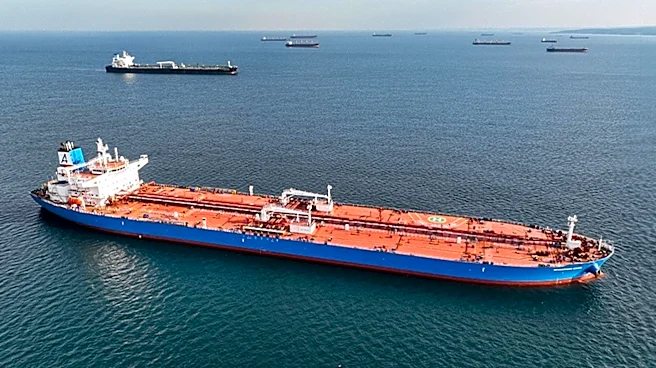
The Strait of Hormuz is a critical chokepoint for global oil shipments, and any disruptions can have significant implications for international energy markets. Oman's reaffirmation of free passage is crucial for maintaining stability in the region and ensuring the uninterrupted flow of oil. The statement also highlights the challenges of navigating diplomatic relations with Iran, which has been accused of aggressive actions in the strait. For the U.S. and its allies, Oman's stance is a positive development, as it aligns with international norms and helps counterbalance Iran's influence in the region.
What's Next?
Oman's statement may prompt further diplomatic engagements with Iran to address security concerns and ensure safe navigation in the Strait of Hormuz. The international community, including the U.S., will likely continue to monitor the situation closely, ready to respond to any further escalations. Oman's position may also encourage other Gulf states to take a firmer stance on maritime security, potentially leading to increased regional cooperation. The situation remains fluid, and any changes in Iran's approach could alter the dynamics in the strait.