



What's Happening?
Research has revealed that Pompeii's public baths were unhygienic until the Romans took control of the city. Before Roman occupation, the Samnite people managed Pompeii, and their public baths were found to be contaminated with organic matter such as sweat
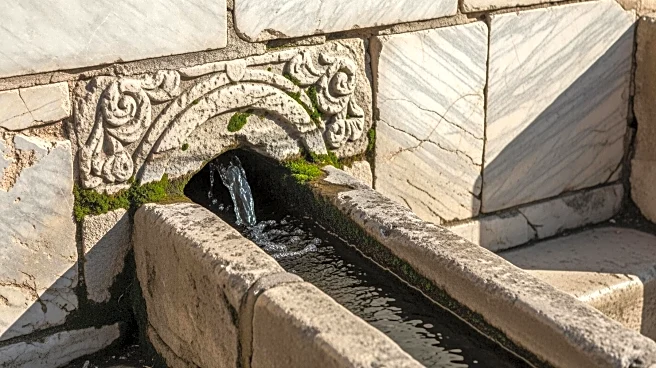
and urine. This was due to the limited water supply, which allowed for only infrequent replenishment of the bathwater. However, after the Romans took over, they constructed an aqueduct that significantly increased the water supply, allowing for more frequent replenishment and improved sanitation. The study, conducted by Gül Sürmelihindi and colleagues at the University of Mainz, analyzed mineral deposits in the bathhouses to determine the quality of the water.
Why It's Important?
The findings highlight the impact of Roman engineering and infrastructure on public health and sanitation. The construction of aqueducts not only improved the hygiene of public baths but also provided a reliable source of drinking water for the residents of Pompeii. This advancement in public health infrastructure reflects the Romans' prioritization of sanitation and public welfare, which had long-term benefits for the cities under their control. The study also sheds light on the cultural and technological differences between the Samnites and Romans, illustrating how Roman innovations contributed to the development of urban centers.
Beyond the Headlines
While the Roman aqueduct improved water quality, it also introduced new challenges, such as lead contamination from the pipes used to distribute water. This highlights the complexity of ancient urban planning and the unintended consequences of technological advancements. The study provides insights into the balance between improving public health and managing the risks associated with new infrastructure. It also underscores the importance of considering long-term impacts when implementing public health measures.