



What's Happening?
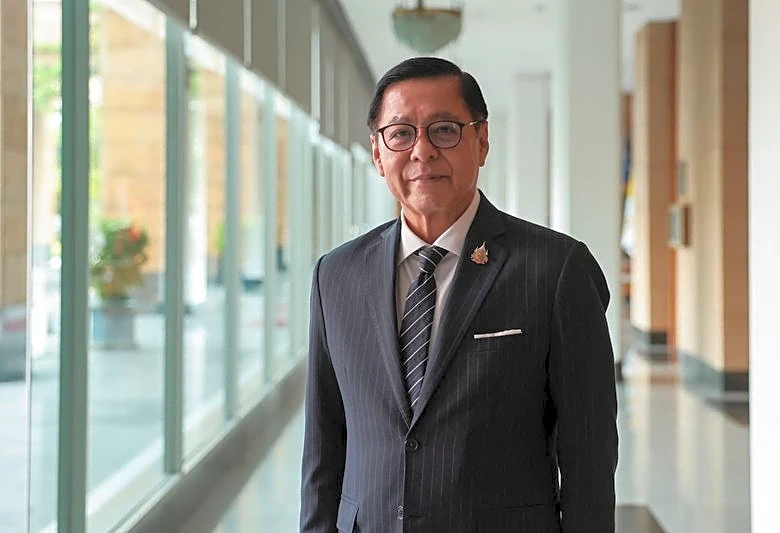
At the St. Petersburg International Economic Forum, Andrei Bezrukov, a retired Russian intelligence colonel and adviser to Rosneft CEO Igor Sechin, warned that Russia is likely to remain in a state of war and engaged in global conflicts for at least the next
two decades. Bezrukov suggested that the conflict could range from 'hot war' to a 'creeping war' spreading across regions, shaping two generations that will effectively grow up during wartime. He claimed Russia is now at the first hump of a world war, predicting a second wave of global confrontation comparable to the World Wars of the 20th century. Bezrukov also revived claims of Western 'biological warfare' against Russia, alleging that laboratories near Russia's borders were working on future biological weapons, accusations long rejected by Western governments.
Why It's Important?
Bezrukov's predictions highlight the potential for prolonged geopolitical instability, which could have significant implications for global security and economic dynamics. If Russia remains in a state of war for decades, it could lead to increased military spending and a shift in economic priorities, potentially affecting international trade and investment. The assertion of a long-term confrontation with the West suggests a continuation of strained diplomatic relations, impacting global alliances and partnerships. Additionally, the focus on militarization and defense readiness could influence Russia's domestic policies and societal structure, affecting its citizens' daily lives and the country's overall development trajectory.
What's Next?
Bezrukov's comments may prompt discussions within Russia about its future strategic direction and the need for economic restructuring to support long-term militarization. Internationally, these predictions could lead to heightened tensions and increased military preparedness among other nations, particularly those in close proximity to Russia. The potential for future escalation in Asia, as suggested by Bezrukov, may also influence regional security policies and alliances. As Russia navigates these challenges, its interactions with global powers and neighboring countries will be closely monitored for signs of further conflict or cooperation.
Beyond the Headlines
The implications of Bezrukov's predictions extend beyond immediate geopolitical concerns, touching on ethical and cultural dimensions. The prospect of a generation growing up during wartime raises questions about the psychological and social impact on Russian society. Additionally, the allegations of biological warfare highlight ongoing narratives of distrust and misinformation, which can exacerbate tensions and hinder diplomatic efforts. The long-term focus on militarization may also affect Russia's cultural identity, as the nation grapples with balancing defense priorities and societal needs.