


What's Happening?
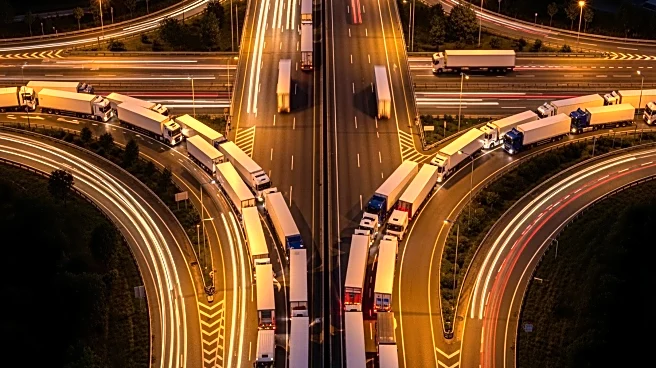
The American Transportation Research Institute (ATRI) has released its 15th annual Top 100 Truck Bottleneck List, identifying the most congested freight bottlenecks in the United States. The 2026 analysis shows a worsening trend in traffic congestion,
with average rush hour truck speeds dropping to 33.2 mph, a 2.8% decrease from the previous year. The top 10 bottlenecks include interchanges in Chicago, Fort Lee, Atlanta, Houston, Cincinnati, and McDonough. The data, derived from truck GPS information across more than 325 national highway locations, aims to guide infrastructure planning and investment. The report emphasizes the need for targeted investments to reduce congestion, lower emissions, and drive economic growth.
Why It's Important?
The findings from ATRI's report are crucial for informing infrastructure investments at local, state, and federal levels. As Congress prepares to reauthorize surface transportation programs, this data provides a roadmap for reducing traffic congestion, which can significantly impact the economy by improving freight flow and reducing operating costs for fleets. The report highlights the economic implications of traffic delays, equating them to 436,000 truck drivers sitting idle for a year. Addressing these bottlenecks can lead to more efficient transportation networks, benefiting industries reliant on timely freight delivery.
What's Next?
The report suggests that states can take proactive measures to address congestion issues. For example, Illinois previously had the nation's top bottleneck but improved its ranking through sustained efforts to expand capacity. Policymakers are encouraged to use this data to implement similar strategies, potentially leading to reduced chokepoints and enhanced economic growth. As infrastructure projects are planned, the focus will likely be on expanding capacity and improving traffic flow in the most congested areas identified by ATRI.