






What's Happening?
The Bureau for Food and Agricultural Policy (BFAP) Baseline 2026 Outlook reveals that South Africa's agricultural sector has consistently grown at an average rate of 3% annually since 2012, significantly outperforming the national economy's less than
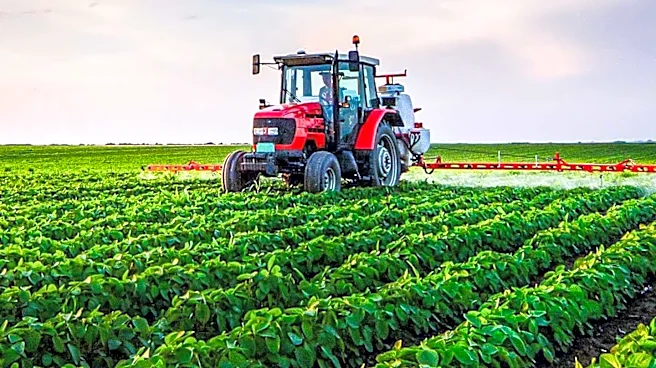
1% growth. Despite this robust performance, the sector faces challenges in meeting National Development Plan (NDP) objectives for 2030 due to a struggling macroeconomic environment, characterized by stagnant national employment, income growth, and capital formation. Commercial producers have achieved growth through efficiency, adopting advanced technology, superior genetics, and intensive management to increase output without expanding farmland. However, the lack of broader national economic growth has constrained domestic consumer demand, limiting the agricultural sector's ability to expand within the local market. Dr. Tracy Davids, Executive Director at BFAP, emphasized that without a sharp acceleration in income growth in South Africa, the agricultural sector's growth will increasingly depend on international trends.
Why It's Important?
The situation in South Africa highlights a critical disconnect between a high-performing agricultural sector and a struggling national economy. While the agricultural sector demonstrates resilience and efficiency, its inability to stimulate broader economic growth or benefit from domestic demand underscores systemic issues. This reliance on international markets for growth exposes the sector to global economic fluctuations and trade policies, potentially impacting its long-term stability. For the U.S., this scenario offers a case study in how national economic conditions can constrain even a productive sector, emphasizing the importance of integrated economic policies. It also illustrates the potential for agricultural exports to become a primary driver of growth when domestic demand is weak, a dynamic that could influence U.S. agricultural trade strategies and competitiveness in global markets. The challenges faced by South African farmers, such as deteriorating infrastructure and biosecurity threats, also serve as a reminder of the foundational support systems necessary for agricultural success, which are relevant considerations for U.S. policymakers and industry stakeholders.
What's Next?
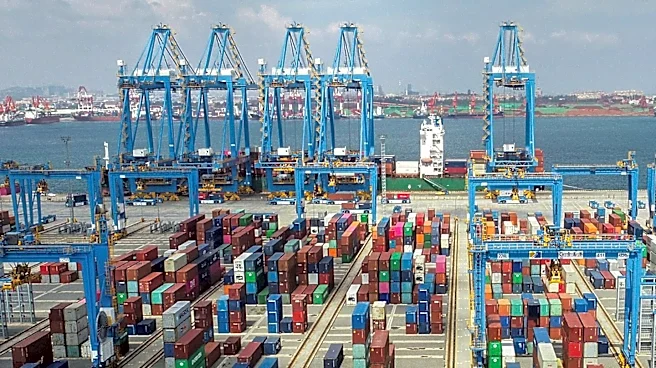
To unlock future growth and achieve its 2050 objectives, the BFAP report outlines three urgent structural priorities for South Africa. These include enabling public-private logistics and infrastructure, with a focus on improving port efficiency and rehabilitating freight rail to maintain global competitiveness for export commodities. Another priority is institutionalizing biosecurity and animal health by restoring veterinary capacity, local vaccine production, and livestock traceability systems, which are crucial for high-value meat exports. Finally, the report calls for expanding evidence-based transformation through targeted blended finance and commercial value-chain integration to support emerging producers, rather than relying on unfunded mandates. The BFAP's analysis suggests that without a significant turnaround in national economic growth and job creation, South African agriculture will increasingly need to focus on export markets for survival. This path requires an active partnership between the government and the private sector, with sustained, coordinated, industry-wide effort, enabling policy reforms, and continued investment to ensure the sector remains adaptive and competitive.
Beyond the Headlines
The South African agricultural sector's predicament reveals deeper implications regarding the limitations of sectoral growth in the absence of broader economic development. Despite its internal efficiencies and technological advancements, the sector cannot single-handedly resolve national socioeconomic deficits. The report highlights how 'off-farm friction,' such as inadequate infrastructure (deteriorating road and rail networks, inefficient export ports), municipal service failures, and persistent biosecurity threats, effectively tax farm profitability, negating gains made at the production level. This situation underscores the ethical and societal responsibility of governments to provide a conducive environment for economic activity, ensuring that the benefits of a productive sector are not eroded by systemic failures. It also points to a long-term shift where agricultural success becomes increasingly dependent on robust national infrastructure and effective governance, rather than solely on farm-level productivity. For the U.S., this serves as a cautionary tale, emphasizing the interconnectedness of various economic and infrastructural elements in sustaining agricultural prosperity and overall national development.