

What's Happening?
Scientists have discovered that currents in the Arctic's Chukchi Sea are causing phytoplankton to sink to the seafloor at four times the usual speed. These tiny, plant-like organisms are crucial for ocean carbon storage and form the base of marine food
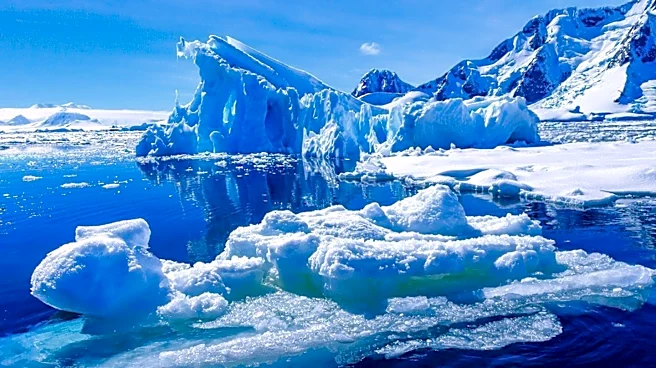
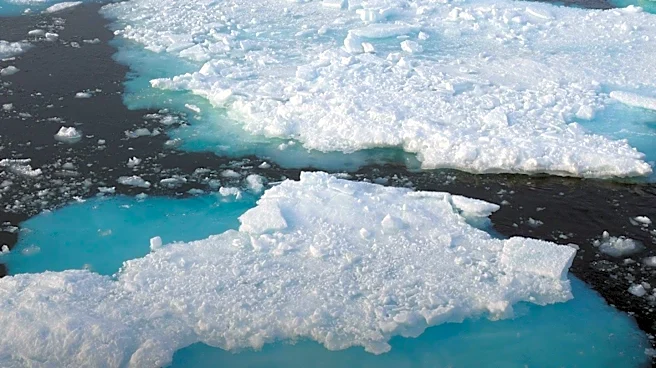
webs. Researchers aboard the R/V Sikuliaq in 2023 studied how local currents and sea ice influence the seasonal growth of phytoplankton. They found that blooms of phytoplankton can be ten times denser in the darker waters beneath thick sea ice compared to open water. Measurements indicate that sunlight filtering through ice cracks is sufficient for photosynthesis, allowing these large populations to thrive in environments previously thought inhospitable. This accelerated sinking helps explain the unexpectedly high populations of clams, brittle stars, walruses, and whales observed on the Arctic seafloor, as it provides a rapid food source.
Why It's Important?
This discovery has significant implications for understanding Arctic ecosystems and global climate change. The Arctic is the fastest-warming region globally, largely due to ice loss. The enhanced sinking of carbon-carrying phytoplankton suggests an increase in carbon absorption and storage in sediments, which could influence the global carbon cycle. However, the long-term effects are complex; warmer freshwater from melting ice could create a surface layer that prevents nutrient-rich waters from reaching phytoplankton, potentially limiting their growth. The findings highlight that relatively small-scale phenomena like phytoplankton blooms and ocean fronts can profoundly shape global ecology and climate. Understanding these processes is vital for predicting how marine ecosystems will adapt as Arctic ice continues to recede and for refining global carbon cycle models.
What's Next?
Further research will focus on understanding the long-term impacts of these accelerated carbon sinking rates on the Arctic's marine food webs and overall carbon budget. Scientists will need to investigate how increasing freshwater input from melting ice might alter nutrient distribution and phytoplankton growth, potentially counteracting the observed carbon sequestration. Monitoring the dynamics of these small-scale physical processes, such as currents and fronts, will be crucial for accurately predicting future changes in the Arctic's role in global climate regulation. The findings also suggest a need to re-evaluate existing models of ocean carbon cycling to incorporate the significant role of these localized phenomena, especially in rapidly changing polar environments.
Beyond the Headlines
The accelerated sinking of phytoplankton in the Chukchi Sea underscores the intricate and often unexpected ways in which climate change is reshaping natural processes. While increased carbon sequestration by phytoplankton might seem beneficial for mitigating atmospheric carbon, the broader ecological consequences are complex. The rapid delivery of organic matter to the seafloor could alter benthic communities, potentially favoring certain species over others and disrupting the delicate balance of the Arctic food web. This phenomenon also highlights the critical role of ice cover, not just as a reflector of sunlight, but as a dynamic environment that can support unique biological productivity. The findings challenge previous assumptions about life under ice and emphasize the need for comprehensive, multidisciplinary research to fully grasp the cascading effects of Arctic warming on global ecosystems and climate.