






What's Happening?
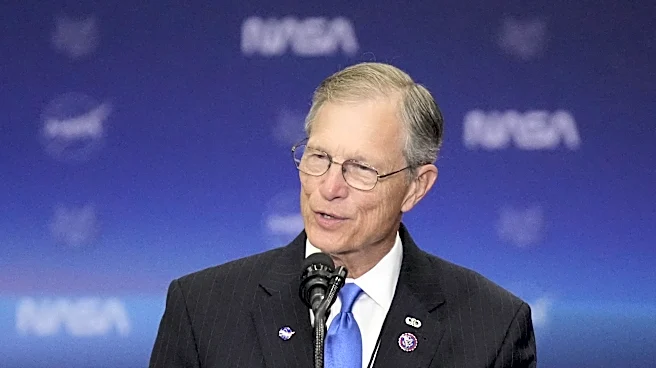
NASA Administrator Jared Isaacman recently visited the University of Central Florida (UCF) to discuss the future of space exploration with students. During his visit, Isaacman highlighted the strong connection between NASA and UCF, noting that 29% of the Kennedy
Space Center workforce are UCF graduates. He emphasized that students are beginning their careers at an extraordinary moment, anticipating America's return to the lunar surface in 2028. Isaacman encouraged students to embrace the 'fire of exploration' and contribute to making humanity a 'true spacefaring civilization.' He also acknowledged UCF's ongoing contributions, including research at the UCF Exolith Lab, which houses the world's largest simulated lunar surface, and the work of planetary scientists Kerri Donaldson Hanna and Adrienne Dove on the $35 million Lunar-VISE mission. Florida Rep. Darren Soto also spoke at the event, reinforcing the importance of the next generation in advancing space exploration.
Why It's Important?
This engagement underscores the critical role of academic institutions like UCF in fostering the next generation of talent essential for advancing U.S. space exploration goals. The collaboration between NASA and universities is vital for developing the necessary technology and expertise to achieve ambitious objectives, such as returning to the Moon and potentially Mars. By inspiring students and supporting cutting-edge research, these initiatives ensure a continuous pipeline of skilled professionals and innovative solutions for the aerospace industry. The focus on lunar missions, like the Lunar-VISE mission, signifies a renewed national commitment to deep space exploration, which can drive technological advancements, create jobs, and maintain U.S. leadership in space. The involvement of political figures like Rep. Darren Soto also highlights the governmental support and strategic importance placed on these endeavors, ensuring sustained funding and policy backing for future missions.
What's Next?
NASA's plans include a grand return to the lunar surface by 2028, a goal that will heavily rely on the talent and technology currently being developed and nurtured at institutions like UCF. The continued emphasis on research in areas such as rotating detonation engine technology, which Professor Kareem Ahmed is exploring for hypersonic travel, indicates a push towards advanced propulsion systems. Future steps will likely involve further collaboration between NASA, universities, and private sector partners to accelerate technological development and prepare for upcoming missions. The ongoing work at the UCF Exolith Lab and the Lunar-VISE mission will continue to provide crucial data and training for lunar exploration. The sustained engagement with students aims to ensure a robust workforce for the 'next space race,' with graduates from programs like UCF's continuing to play a significant role in launching missions and conducting research at facilities like the Kennedy Space Center.
Beyond the Headlines
The narrative of space exploration extends beyond scientific and technological achievements; it also encompasses national identity and global leadership. The call for students to 'pick up the fire of exploration' taps into a broader cultural aspiration for discovery and human advancement. This initiative can foster a sense of national pride and inspire young people to pursue STEM careers, addressing potential future workforce shortages in critical sectors. Furthermore, the development of advanced technologies for space, such as those for lunar surface operations and hypersonic travel, often has spillover benefits for terrestrial applications, driving innovation in various industries. The emphasis on reusability and cost-effectiveness in space travel, as discussed in broader industry contexts, suggests a long-term vision for making space access more routine and economically viable, potentially transforming global communication, resource management, and even tourism.