
What's Happening?
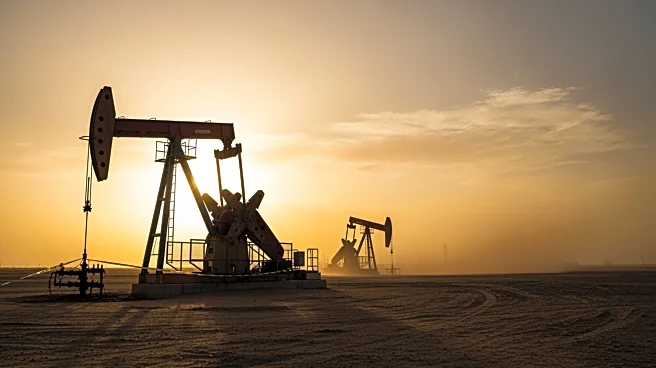
The Syrian army has taken control of the country's largest oil field, the Omar facility, from Kurdish forces in north-eastern Syria. This development follows the withdrawal of the Kurdish-led Syrian Democratic
Forces (SDF) east of the Euphrates River after recent deadly clashes. The Syrian government, led by President Ahmed al-Sharaa, is seeking to integrate Kurdish bodies into national institutions, a move that has led to tensions and conflict. The SDF's pullback was reportedly influenced by talks with U.S. officials. The Syrian army's advance also included capturing the strategic Tabqa dam. The situation remains tense as both sides have accused each other of various acts, including the destruction of infrastructure.
Why It's Important?
The seizure of the Omar oil field is significant as it represents a major shift in control over Syria's oil resources, which have been a critical source of revenue for the Kurdish forces. This development could alter the balance of power in the region, affecting the economic and political landscape. The U.S. has historically supported the SDF, complicating its position as it also seeks to maintain relations with the Syrian government. The integration of Kurdish forces into Syrian national institutions could lead to a more unified state, but it also risks further conflict if not managed carefully. The situation highlights the complex dynamics of international involvement in Syria, with potential implications for regional stability.
What's Next?
The future of the region remains uncertain as the Syrian government continues its efforts to consolidate control. The U.S. may need to reassess its strategy in Syria, balancing its support for the SDF with diplomatic engagements with the Syrian government. The Kurdish forces, having lost a significant revenue source, may seek new alliances or strategies to maintain their influence. The international community will likely continue to monitor the situation closely, with potential for further negotiations or interventions to prevent escalation.