



What's Happening?
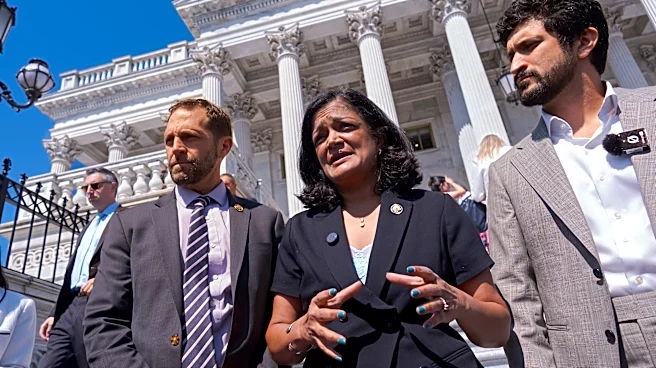
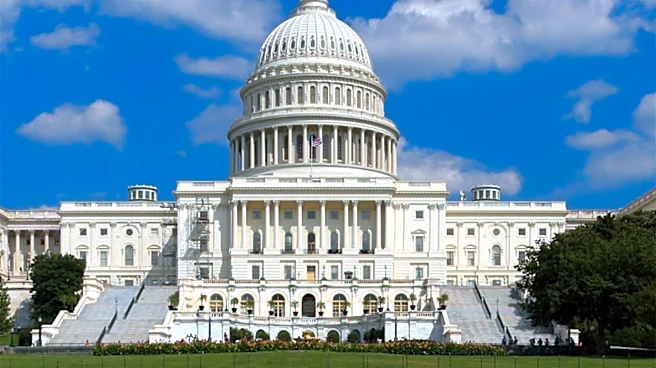
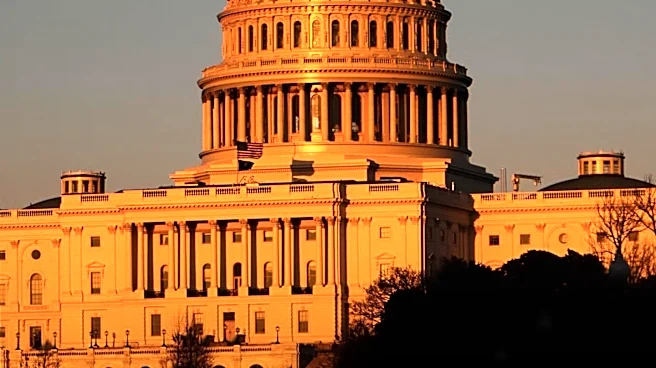
The U.S. House of Representatives narrowly passed a resolution on Thursday to halt military action in Iran, signaling a warning to President Trump as the conflict escalates. The resolution, which passed with a 214-208 vote, requires congressional approval
for the war and reflects growing bipartisan concern over the administration's handling of the conflict. The Senate is expected to consider a similar resolution. The war, criticized for lacking a clear mission or strategy, has seen continued U.S. airstrikes and diplomatic stalemates, particularly over the Strait of Hormuz. Rising fuel prices and economic disruptions are adding pressure as midterm elections approach. Despite the resolution's symbolic nature, it highlights diminishing support for the war on Capitol Hill.
Why It's Important?
The resolution underscores significant political and public discontent with the ongoing military actions in Iran. It reflects a broader skepticism about the Trump administration's foreign policy and its implications for U.S. economic stability and international relations. The conflict has led to increased fuel prices, affecting American consumers and businesses. The resolution also highlights a shift in congressional dynamics, with some Republicans breaking ranks, indicating potential challenges for the administration's future military and foreign policy initiatives. The outcome of this legislative push could influence U.S. military engagement strategies and diplomatic efforts in the region.
What's Next?
The Senate's consideration of a similar resolution will be crucial in determining the legislative branch's stance on military action in Iran. If passed, it could further constrain the administration's military options and force a reevaluation of its strategy. The ongoing conflict and its economic repercussions are likely to remain central issues in the upcoming midterm elections, potentially affecting voter sentiment and party dynamics. Additionally, continued diplomatic efforts and negotiations will be necessary to address the underlying tensions and seek a resolution to the conflict.