





What's Happening?
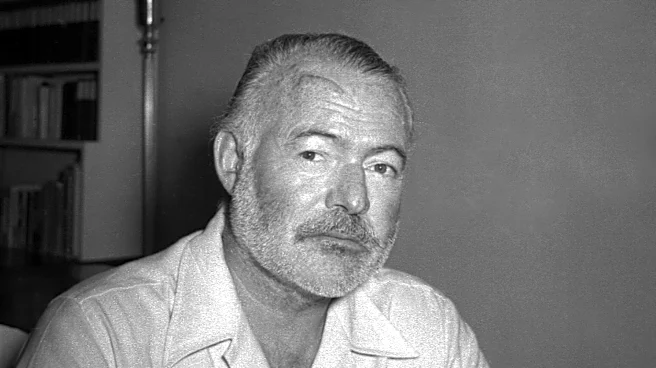
F. Scott Fitzgerald's classic novel, 'The Great Gatsby,' maintains significant popularity in the U.S. print market, with sales approaching 8 million copies over the past two decades. This performance notably surpasses that of Ernest Hemingway's 'The Sun
Also Rises,' which sold just over 1 million copies in the same period. According to Circana, a firm tracking approximately 85% of the print market, 'The Sun Also Rises' sold under 40,000 copies this year, a decrease from its peak of over 60,000 copies annually in the 2010s. Despite 'The Sun Also Rises' celebrating its centennial, its sales figures indicate that 'The Great Gatsby' remains a more dominant force in contemporary book sales. The enduring appeal of Fitzgerald's work highlights its continued relevance and widespread readership in American literature.
Why It's Important?
The sustained high sales of 'The Great Gatsby' underscore its enduring cultural and educational significance in the U.S. Its continued popularity, especially when compared to another literary giant like Hemingway, suggests that Fitzgerald's exploration of the American Dream, wealth, and social class resonates deeply with successive generations of readers. This commercial success impacts the publishing industry, influencing curriculum choices in schools and universities, and potentially shaping literary trends. For educators, the book's consistent presence in the market reinforces its status as a foundational text for studying American history and societal values. The disparity in sales also highlights how certain literary works can maintain or even grow their audience over time, while others, despite critical acclaim, may see fluctuating readership, affecting their long-term cultural footprint and market value.
What's Next?
Given its consistent sales performance, 'The Great Gatsby' is likely to remain a staple in American literature curricula and a strong seller in the U.S. book market. Publishers will continue to invest in new editions, adaptations, and related content, capitalizing on its established appeal. For 'The Sun Also Rises,' its centennial might spark renewed interest and potentially boost sales, but it is unlikely to match the sustained commercial success of 'The Great Gatsby.' Literary scholars and educators will continue to analyze both works, exploring their themes and relevance in contemporary society. The ongoing sales data will provide valuable insights into evolving reading habits and the long-term market viability of classic American literature.
Beyond the Headlines
The contrasting sales figures between 'The Great Gatsby' and 'The Sun Also Rises' offer a glimpse into the evolving reception and perceived relevance of classic American literature. While both are seminal works of the 'Lost Generation,' Fitzgerald's narrative of aspiration and disillusionment in the Jazz Age appears to strike a more universal chord with modern audiences. This could be attributed to its themes of wealth, class, and the elusive nature of happiness, which remain pertinent in contemporary American society. The continued dominance of 'The Great Gatsby' suggests that its portrayal of the American Dream, with its inherent promises and pitfalls, continues to serve as a powerful lens through which readers understand their own societal aspirations and challenges, solidifying its place as a timeless cultural touchstone.