








What's Happening?
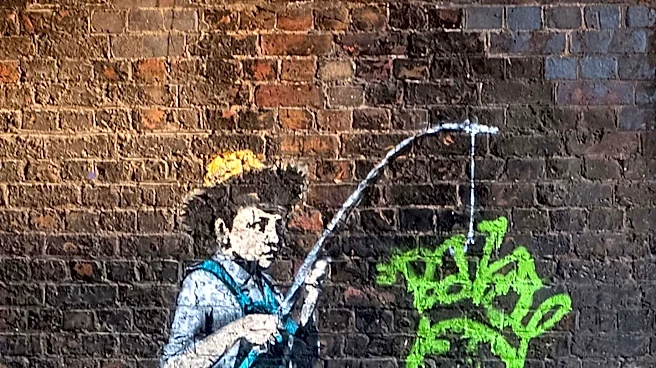
Three artworks by the anonymous street artist Banksy have resulted in nearly £150,000 in public expenses for their removal and related security measures in London. The most costly piece was a mural on the Royal Courts of Justice, depicting a protester
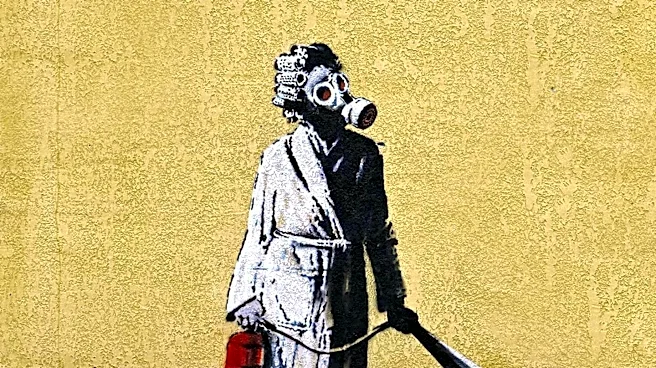
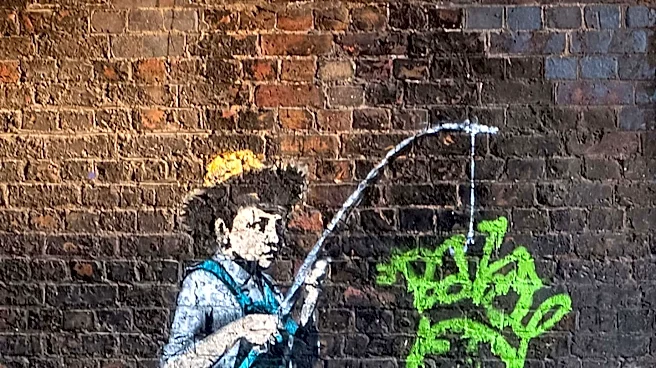
and a judge, which has cost over £85,000 to remove. This artwork was seen as a critique of the UK government's actions against the activist group Palestine Action. Additional costs were incurred for a Banksy statue in Waterloo Place and a transformed police sentry box, which is set to be displayed at the London Museum. The debate over the value and impact of Banksy's work continues, with some viewing it as valuable public art and others as vandalism.
Why It's Important?
The financial burden of removing Banksy's artworks raises questions about the allocation of public funds and the role of street art in public spaces. While some argue that Banksy's work attracts tourism and cultural interest, others, like Shadow Justice Secretary Nick Timothy, criticize the use of taxpayer money for what they consider vandalism. This situation highlights the ongoing tension between preserving cultural expression and maintaining public order and fiscal responsibility. The debate also touches on broader issues of how public spaces are used and who gets to decide what is considered art versus vandalism.