





What's Happening?
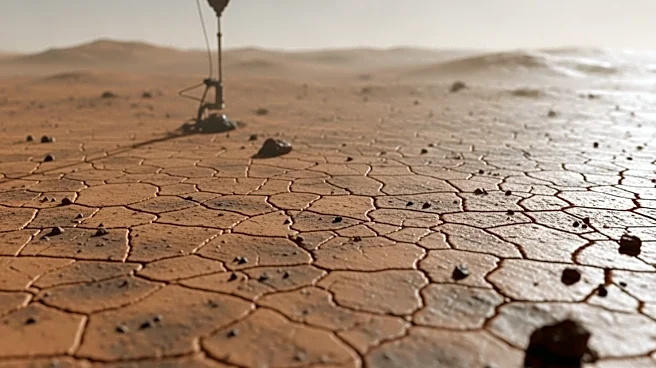
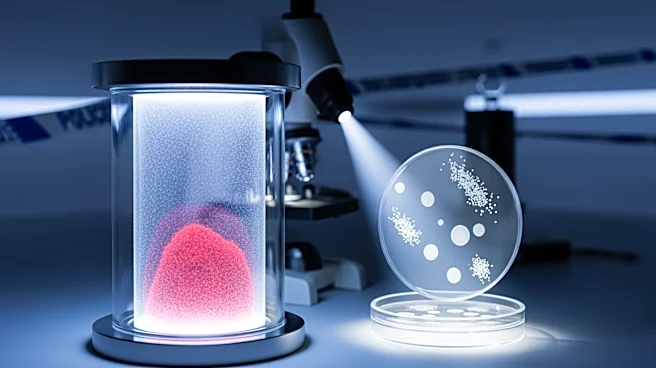
Researchers have successfully recreated hostile conditions similar to those found on Mars in a laboratory setting, using Saccharomyces cerevisiae, a yeast species. The study involved exposing these yeast cells to intense shock waves and toxic perchlorate
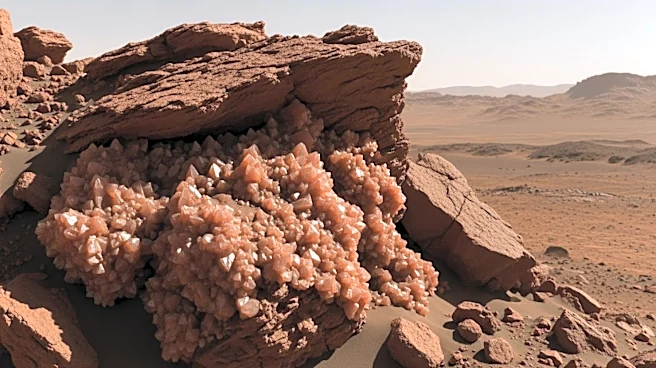
salts, which are prevalent on Mars. The High-Intensity Shock Tube for Astrochemistry (HISTA) in India was used to generate shock waves reaching 5.6 times the speed of sound, mimicking meteorite impacts on Mars. Despite these extreme conditions, the yeast cells managed to survive, although their growth rate was reduced. The study highlights the yeast's ability to form ribonucleoprotein (RNP) condensates, which act as protective structures during stress.
Why It's Important?
This research is significant as it suggests that simple life forms may possess mechanisms to endure extreme environments, potentially similar to those on Mars. The findings could have implications for future space exploration, particularly in the search for life on Mars. Understanding how life can survive under such conditions may inform the development of biological systems for long-term space missions. Additionally, the study opens up possibilities for using yeast in space exploration, given its resilience to Mars-like stressors.
What's Next?
The study's results may encourage further research into the survival mechanisms of simple organisms under extreme conditions. Future experiments could explore other life forms and their potential for space exploration. The findings may also lead to discussions about incorporating yeast or similar organisms in future Mars missions, to study their adaptability and resilience in real Martian environments.
Beyond the Headlines
The ability of yeast cells to form protective RNP condensates under stress highlights a potential strategy that life on Mars might employ to survive. This discovery could lead to a deeper understanding of how life adapts to harsh environments, influencing theories about extraterrestrial life. The study also raises questions about the ethical considerations of using living organisms in space exploration.