



What's Happening?
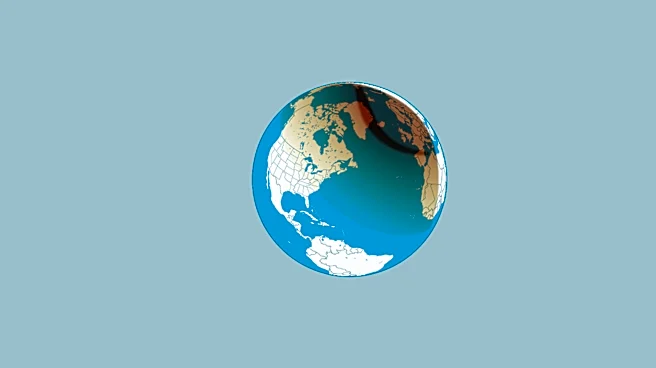
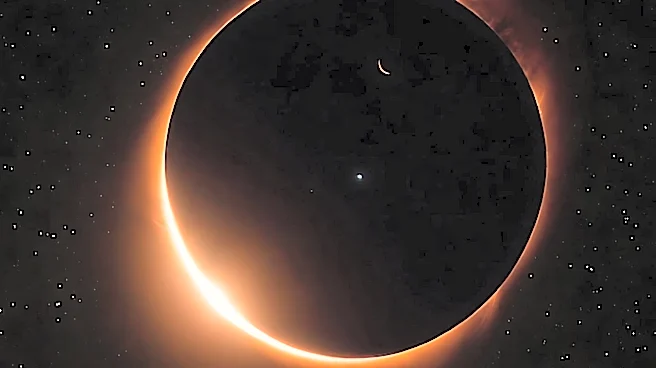
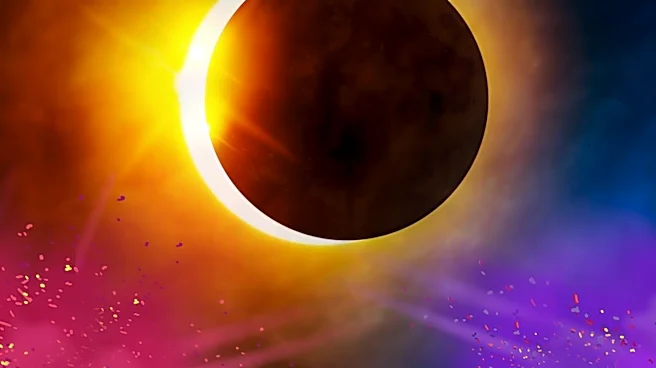
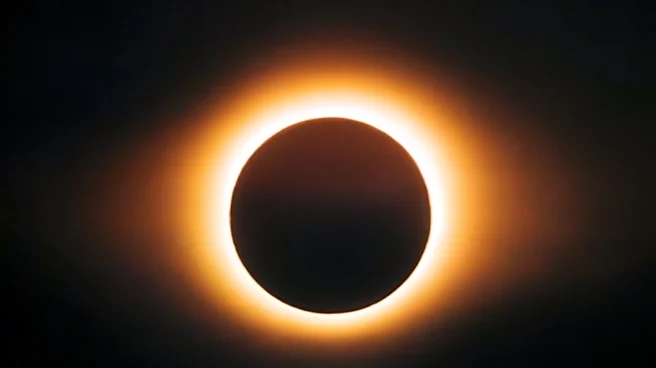
A partial solar eclipse is set to occur on August 12, 2026, and will be visible across many northern U.S. states. While the total solar eclipse will be visible in parts of Greenland, Iceland, Portugal, Russia, and Spain, the United States will only experience
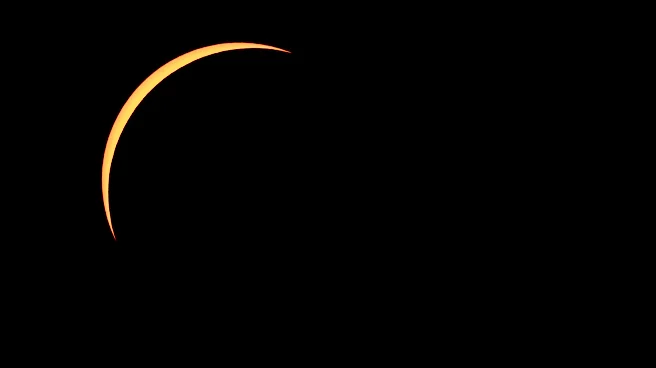
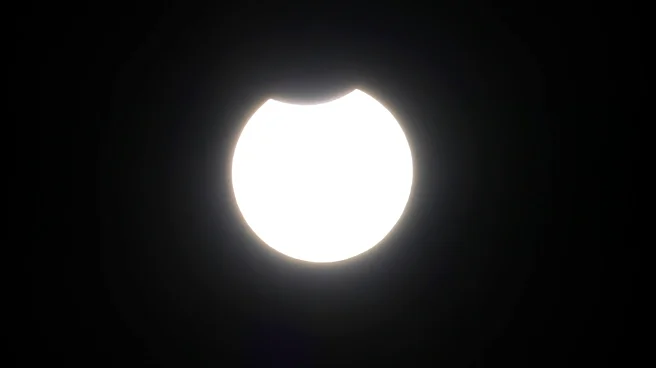
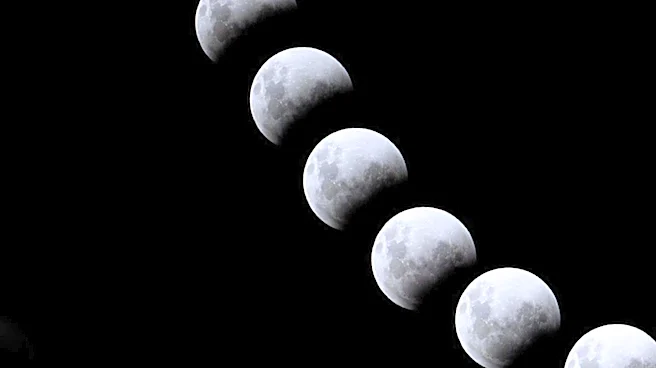
a partial eclipse. During this event, the moon will partially cover the sun, creating a crescent shape. The eclipse will be most visible in Alaska, with over 20% coverage, while states in New England and New York will see between 10-20% coverage. NASA advises that it is unsafe to view the eclipse directly without proper eye protection, such as solar eclipse glasses.
Why It's Important?
Solar eclipses are significant astronomical events that offer unique opportunities for scientific observation and public engagement with astronomy. The partial eclipse provides a chance for educational outreach and increased interest in space science. It also serves as a reminder of the importance of eye safety during such events, as improper viewing can lead to serious eye injuries. The event highlights the need for public awareness and education on safe viewing practices, which can be facilitated through resources provided by organizations like NASA.
What's Next?
As the eclipse approaches, educational institutions and science organizations may organize viewing events and workshops to educate the public on safe viewing techniques. NASA and other scientific bodies will likely continue to provide resources and information to ensure public safety and maximize the educational potential of the event. The eclipse may also inspire future interest in astronomy and space exploration among the public, particularly in regions where the eclipse is most visible.