






What's Happening?
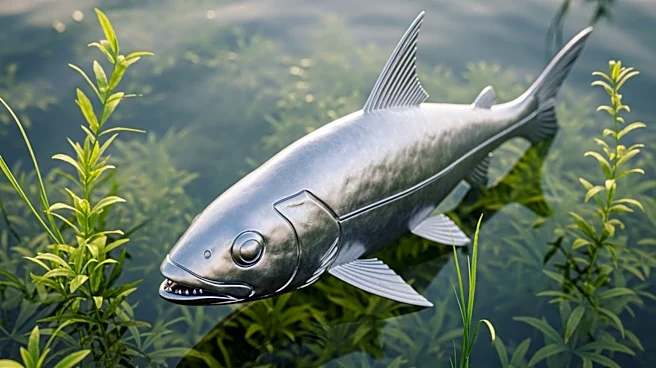
Northern snakehead fish, colloquially known as 'Frankenfish,' are causing ecological disruptions along the East Coast of the United States. These invasive predators, native to Asia, have colonized the Chesapeake Bay watershed and are spreading to other
regions, including Delaware, Maryland, New York, Pennsylvania, Virginia, and West Virginia. The snakeheads can survive out of water for days and move on land, posing a threat to native fish species, recreational fishing, and aquatic ecosystems. The U.S. Fish and Wildlife Service classifies them as an injurious species under the Lacey Act, prohibiting their possession or transport while alive. Efforts to control their population include angler harvesting, which has shown some success in reducing their numbers.
Why It's Important?
The spread of northern snakehead fish poses significant ecological and economic challenges. Their presence threatens native fish populations and disrupts local ecosystems, potentially leading to declines in biodiversity. The recreational fishing industry, which relies on healthy fish populations, could suffer economic losses due to the snakehead's predatory behavior. Control measures are crucial to prevent further ecological damage and protect native species. The situation highlights the broader issue of invasive species management and the need for coordinated efforts to mitigate their impact. Public awareness and participation in control efforts, such as reporting sightings and harvesting snakeheads, are essential components of managing this invasive threat.
What's Next?
Efforts to control the northern snakehead population will continue, with a focus on public education and engagement. Anglers are encouraged to target and harvest snakeheads, and report sightings to state conservation agencies. While eradication is unlikely, ongoing management strategies aim to limit their spread and mitigate ecological impacts. Collaboration between state and federal agencies will be key in developing effective control measures. Monitoring and research will provide valuable data to inform future management decisions and improve understanding of the snakehead's ecological impact.