






What's Happening?
A new review of bioarchaeological and archaeological research challenges traditional understandings of ancient Nubian identity. The study argues that Nubian identity was not simply a choice between 'Nubian' and 'Egyptian' but was instead flexible, layered,
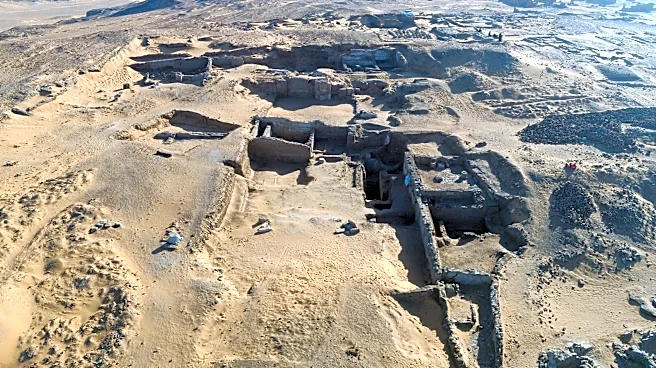
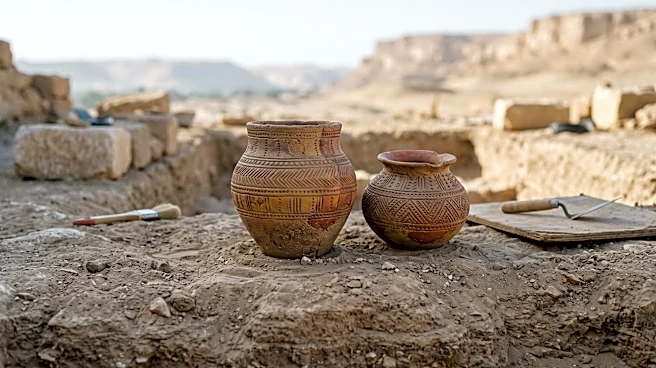
and continuously reshaped by political and social changes along the Middle Nile Valley. Researchers integrated skeletal evidence, burial contexts, material culture, visual representations, and social theory to present a more nuanced picture. For instance, evidence from Tombos in Sudan shows that an individual with dwarfism was not treated differently in burial, suggesting that physical differences did not automatically lead to social exclusion. Similarly, burial styles, such as Egyptian-style tombs versus traditional Nubian tumuli, did not neatly correspond to elite or non-elite status, indicating that Nubian customs could be associated with privileged positions. The review also highlights how material culture, like Nubian-style pottery in Egyptian settlements, might reflect shared food practices and intermarriage rather than strict ethnic origins. This comprehensive approach emphasizes that centuries of contact blurred rigid distinctions between 'Egyptian' and 'Nubian' identities, while still allowing local traditions to persist and evolve.
Why It's Important?
This re-evaluation of ancient Nubian identity is significant because it moves beyond a simplistic, binary understanding of cultural influence, particularly in regions historically viewed through the lens of dominant neighboring civilizations. By centering Nubia in the analysis, the research provides a more accurate and respectful portrayal of its complex societal structures and cultural evolution. This shift in perspective can influence how historical narratives are constructed and taught, promoting a more inclusive understanding of ancient civilizations. For archaeology and anthropology, it underscores the importance of interdisciplinary approaches and critical re-examination of long-held assumptions, particularly those that might project modern biases onto historical contexts. Understanding how ancient societies managed identity in the face of external pressures offers valuable insights into cultural resilience, adaptation, and the dynamic nature of human identity, which can inform contemporary discussions on cultural heritage and diversity.
What's Next?
The findings of this review are likely to stimulate further research into ancient Nubian societies, encouraging archaeologists and historians to adopt more integrated and nuanced methodologies. Future studies may focus on specific aspects highlighted by the review, such as the detailed analysis of skeletal remains for insights into labor and health, or the interpretation of adornment like tattoos as expressions of private devotion versus public display. This new framework could also lead to re-interpretations of existing archaeological collections and sites, potentially uncovering previously overlooked details about Nubian daily life, social hierarchies, and religious practices. Furthermore, the emphasis on flexible and layered identities may inspire comparative studies with other ancient cultures that experienced significant external contact, fostering a broader understanding of cultural interaction and identity formation in antiquity. The academic community will likely engage in discussions to refine these interpretations and explore their implications for broader historical and anthropological theories.
Beyond the Headlines
The deeper implications of this research extend to challenging the very framework through which historical identities are often understood. By demonstrating that Nubian identity was 'lived through bodies'—shaped by work, care, movement, belief, appearance, and relationships—the review offers a powerful model for understanding identity as an embodied and dynamic process rather than a static label. This perspective has ethical implications, urging scholars to avoid imposing modern ethnic or nationalistic categories onto ancient peoples, which can distort historical realities. Legally and culturally, a more accurate understanding of ancient Nubian identity can support efforts to preserve and interpret Nubian heritage in a way that respects its complexity and autonomy, rather than viewing it merely as an offshoot of Egyptian culture. This shift encourages a global re-evaluation of how historical narratives are constructed, promoting a more equitable representation of diverse human experiences throughout history and fostering a deeper appreciation for the intricate ways cultures interact and evolve.