



What's Happening?
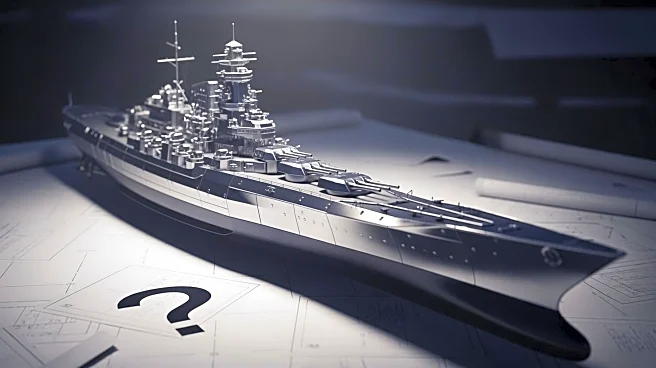
President Trump has announced plans for a new class of battleships, referred to as 'Trump-class battleships,' despite the lack of authorization or funding from Congress. The proposal has been criticized for its lack of understanding of modern naval warfare
and the current state of the U.S. shipbuilding industry. The U.S. Navy has faced challenges in building new ships due to a deindustrialized industrial base, with several major surface combatant programs canceled in recent decades. The announcement has raised concerns about the constitutional process, as any military spending must be authorized and funded by Congress through a Defense Authorization Act and a Defense Appropriations Act.
Why It's Important?
The announcement of the 'Trump-class battleships' highlights ongoing issues within the U.S. military procurement process and the challenges faced by the shipbuilding industry. The lack of congressional authorization and funding underscores the importance of adhering to constitutional processes in military spending. This situation also reflects broader concerns about the feasibility and strategic value of investing in large warships, which some experts consider obsolete in modern warfare. The proposal could have significant implications for defense policy and budget priorities, potentially affecting the allocation of resources within the military.
What's Next?
If President Trump proceeds with plans to develop the 'Trump-class battleships' without congressional approval, it could lead to legal challenges and further political controversy. Congress may need to address the issue by clarifying its stance on military spending and the authorization process. The shipbuilding industry may also face increased scrutiny regarding its capacity to deliver new naval vessels. Stakeholders, including military leaders and policymakers, will likely engage in discussions about the strategic direction of U.S. naval forces and the role of large surface combatants in future defense planning.
Beyond the Headlines
The proposal for 'Trump-class battleships' raises questions about the balance between political ambitions and military practicality. It highlights the tension between presidential initiatives and the constitutional role of Congress in defense matters. The situation also reflects broader debates about the future of naval warfare and the relevance of traditional battleships in an era of advanced technology and changing military threats. This development may prompt a reevaluation of defense strategies and the prioritization of resources in the context of evolving global security challenges.