







What's Happening?
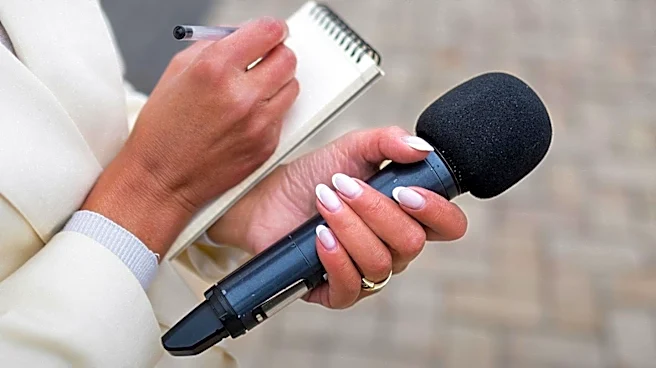
A study conducted by the South African National Editors' Forum (SANEF) has found that 75% of South African women journalists experience online misogyny. This pervasive issue includes threats, harassment, and attempts to silence them, creating a hostile
environment for women in the profession. The hostility is described as 'manufactured anger,' amplified by digital platforms whose business models often thrive on outrage and misinformation. Women covering politics or corruption are particularly targeted. In 2024, Women Press Freedom identified 12 Strategic Lawsuits Against Public Participation (SLAPP) filed against women reporting on gender issues. Despite these challenges, women journalists continue their work, holding power accountable and telling important stories. Discussions among prominent women journalists in Johannesburg, such as Karyn Maughan, Qaanitah Hunter, and Redi Tlhabi, highlighted the difficulties of navigating digital hostility while maintaining visibility and credibility. The consensus among these journalists is that targeted abuse aims to drive women out of public discourse.
Why It's Important?
The widespread online misogyny targeting women journalists in South Africa has significant implications for press freedom, gender equality, and the quality of public discourse. When 75% of women in a critical profession face harassment, it creates a chilling effect, potentially deterring women from entering or remaining in journalism, thereby reducing diversity of voices and perspectives. This issue undermines the democratic function of the press by attempting to silence those who report on sensitive topics like politics and corruption. The 'manufactured anger' fueled by platform algorithms suggests a systemic problem within the digital landscape, where business models inadvertently contribute to the spread of hate and misinformation. The use of SLAPP suits further indicates a coordinated effort to suppress reporting, particularly on gender issues. This environment not only impacts the mental and physical well-being of journalists but also limits the public's access to diverse and critical information, ultimately weakening democratic institutions and societal progress.
What's Next?
Addressing the issue of online misogyny against women journalists will require multi-faceted efforts from various stakeholders. Governments and media institutions are urged to take cyber misogyny seriously, potentially leading to the development and enforcement of stronger regulations and policies. Digital platforms will likely face increased pressure to be held accountable for the anonymity that shields abusers, which could result in changes to their content moderation policies and business models. Newsrooms, even those facing financial constraints, will need to implement stronger support systems for their female journalists, including psychological support and legal aid. Furthermore, there is a call for greater solidarity among journalists to combat these attacks. The ongoing efforts to report and hold power accountable, despite the hostility, suggest a continued fight for truth and empathy in journalism. Future developments may include more collaborative initiatives between media organizations, tech companies, and governmental bodies to create a safer online environment for journalists.
Beyond the Headlines
The prevalence of online misogyny against women journalists extends beyond individual harassment, revealing deeper societal and ethical challenges. Ethically, it highlights the responsibility of digital platforms to mitigate harm caused by their algorithms and business practices, rather than inadvertently profiting from 'outrage and misinformation.' Legally, the use of SLAPP suits against journalists reporting on gender issues raises concerns about freedom of expression and the weaponization of legal systems to silence critical voices. Culturally, the targeted abuse reflects persistent patriarchal attitudes and a resistance to women's empowerment in public spheres. The disproportionate attacks on women in journalism underscore a broader struggle for gender equality, where women who challenge norms or report on sensitive topics are met with hostility designed to discredit and exhaust them. This situation could trigger long-term shifts in how journalism is practiced, potentially leading to more resilient support networks for journalists and a re-evaluation of the role of anonymity in online interactions.