



What's Happening?
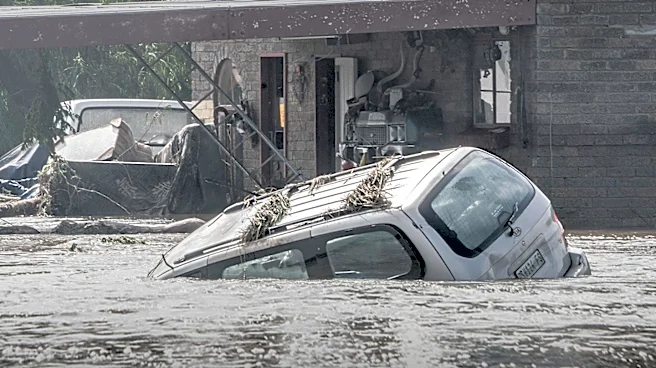
The death toll from monsoon rains and flash flooding in Pakistan has surpassed 100, with more heavy rain expected in the coming days. The National Disaster Management Authority reported that 109 people have died since June 26, primarily due to collapsing
houses and roofs. The northwestern Khyber Pakhtunkhwa province has been particularly affected. The government is reviewing flood preparedness measures and issuing warnings to communities along rivers to prevent further casualties.
Why It's Important?
The monsoon season in Pakistan poses significant challenges, with the potential for widespread destruction and loss of life. The country's infrastructure and emergency response systems are often strained during such events, highlighting the need for improved disaster management and climate adaptation strategies. The situation also underscores the vulnerability of developing countries to extreme weather events, which can exacerbate existing socio-economic challenges and hinder development efforts.
What's Next?
As heavy rains continue, the focus will be on implementing effective flood management and evacuation plans to protect vulnerable communities. The government may seek international assistance to bolster its response capabilities and address the immediate needs of affected populations. Long-term strategies will likely involve enhancing infrastructure resilience and investing in climate adaptation measures to reduce the impact of future monsoon seasons.
Beyond the Headlines
The recurring monsoon-related disasters in Pakistan raise questions about climate justice and the responsibility of developed nations to support vulnerable countries in building resilience. The situation also highlights the need for global cooperation in addressing climate change and its impacts, particularly in regions that are disproportionately affected by extreme weather events.