









What's Happening?
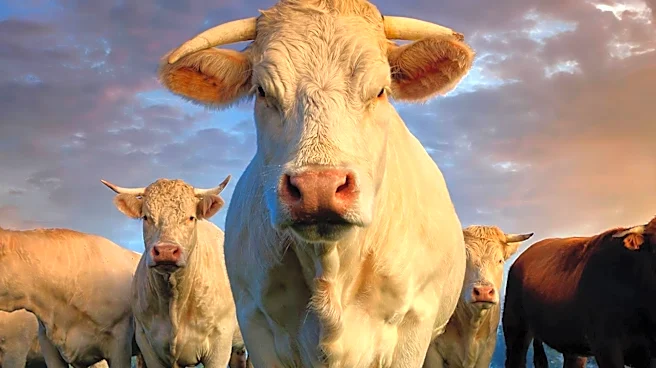
Colorado ranchers are contending with significant challenges, including escalating production costs, persistent drought conditions, and diminishing opportunities, as the U.S. cattle herd has reached its smallest size in decades. This situation is compelling
many producers to innovate and adapt their operations to remain viable. For instance, Nicole Uthmann, whose family has six generations of ranching experience, has seen her feedlot's cattle count drop from a permitted 3,500 to approximately 500 head. Ranchers are experiencing increased expenses across the board for fuel, equipment, fertilizer, and feed, which severely compresses profit margins. Additionally, agricultural land around areas like Fort Collins is being converted into housing developments, further reducing available space for ranching. The industry also faces a generational gap, with fewer young individuals entering ranching as older generations retire. Some ranchers, like Jeff Marsh, are growing their own feed to cut costs, while others, such as the Uthmann family, have opened direct-to-consumer farm stores to gain more control over their product's market access.
Why It's Important?
The struggles faced by Colorado ranchers reflect a broader national crisis within the U.S. cattle industry, which has seen its herd shrink to historic lows. This decline has significant implications for the national beef supply, potentially leading to higher consumer prices and increased reliance on imported beef. The rising costs of operation, coupled with environmental challenges like drought, threaten the sustainability of family-owned ranches, which are a cornerstone of rural economies and American agricultural heritage. The generational shift, with fewer young people entering the industry, poses a long-term threat to the continuity of ranching knowledge and practices. The adaptation strategies, such as direct-to-consumer sales, highlight a growing trend among producers to seek greater independence from traditional supply chains and connect directly with consumers, potentially reshaping the future of agricultural marketing and distribution. The challenges also extend to the processing sector, with plant closures and labor disputes further complicating the supply chain.
What's Next?
Ranchers in Colorado and across the U.S. will likely continue to explore and implement adaptive strategies to cope with rising costs and shrinking herds. This could include further diversification of income streams, increased adoption of direct-to-consumer sales models, and continued efforts to optimize resource use, such as growing their own feed. The industry will also be closely watching for any policy interventions or support programs from state and federal governments aimed at alleviating financial pressures or promoting herd rebuilding. The trend of consolidation in the beef processing industry, marked by plant closures, suggests that ranchers may face ongoing challenges in accessing processing facilities, potentially driving more producers towards local or on-farm processing solutions. The long-term viability of many ranching operations will depend on their ability to innovate and adapt to these persistent economic and environmental pressures, as well as the potential for market shifts that could favor smaller, more localized food systems.
Beyond the Headlines
The shrinking U.S. cattle herd and the struggles of ranchers in Colorado point to deeper systemic issues within the agricultural sector, including the impact of climate change on food production and the economic pressures faced by small and medium-sized agricultural businesses. The conversion of agricultural land for housing development highlights the ongoing tension between urban expansion and rural land preservation, raising questions about land use policies and food security. The generational gap in ranching reflects broader societal trends regarding labor, economic opportunity, and the appeal of traditional agricultural lifestyles. This situation also underscores the vulnerability of the food supply chain to various shocks, from environmental disasters to economic downturns, and the need for greater resilience. The move towards direct-to-consumer sales, while a survival strategy, also represents a cultural shift towards consumers seeking more transparency and connection with their food sources, potentially fostering a more localized and sustainable food system in the long run.