
What's Happening?
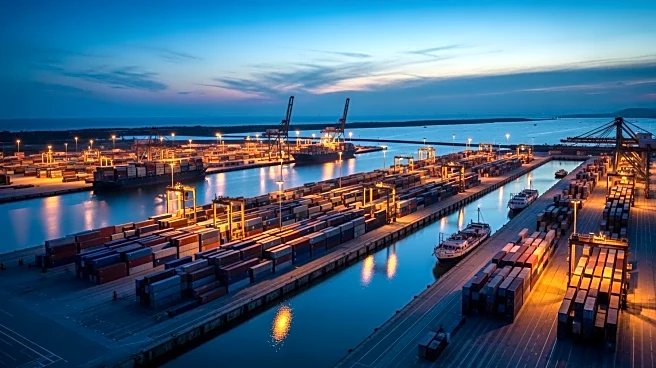
The India-Middle East-Europe Economic Corridor (IMEC) is poised to become a transformative trade route, reminiscent of ancient trade paths. The corridor aims to enhance logistics and trade across the region,
potentially bypassing Israel if its main line is established through Syria or Egypt. This development is likened to historical shifts where the Ishmaelites dominated trade routes, leveraging their control over desert paths and camels to establish a monopoly on long-distance trade. The IMEC corridor represents a modern opportunity for regional economic integration, similar to the ancient trade networks that reshaped the economic landscape.
Why It's Important?
The establishment of the IMEC corridor could significantly alter the economic landscape of the Middle East, impacting regional trade and logistics. If Israel is bypassed, it may miss out on economic benefits associated with being a central hub in this new trade route. The corridor could enhance connectivity between India, the Middle East, and Europe, fostering economic growth and cooperation. This development underscores the importance of strategic positioning in global trade networks, as countries involved stand to gain from increased trade flows and economic partnerships.
What's Next?
Countries in the region may need to make strategic decisions regarding their involvement in the IMEC corridor. Israel, in particular, faces the challenge of ensuring its inclusion in the corridor to benefit from the economic opportunities it presents. Regional stakeholders might engage in negotiations to secure favorable positions within the trade network. The corridor's development could lead to infrastructure investments and policy adjustments to accommodate increased trade activity.
Beyond the Headlines
The IMEC corridor highlights the evolving nature of global trade and the importance of infrastructure in facilitating economic growth. It also reflects historical patterns where control over trade routes led to economic dominance. The corridor could influence geopolitical dynamics, as countries vie for strategic advantages in the new trade landscape. This development may also prompt discussions on regional cooperation and economic integration.