





What's Happening?
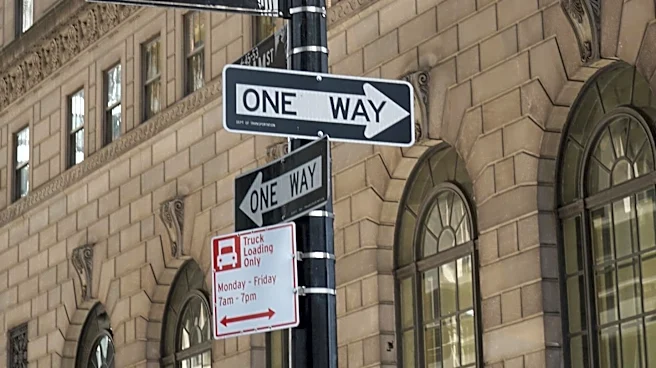
New York City is experiencing a widespread issue with stickers, a form of graffiti, adhering to public infrastructure such as street signs, lampposts, and fire hydrants. This phenomenon is particularly noticeable in neighborhoods like Bushwick and the
Lower East Side, where stickers are prevalent on nearly every available surface. NY1's Roger Clark has initiated an investigation into this trend, seeking to understand the individuals responsible for placing these stickers, their motivations for doing so, and the entities tasked with their removal. The city's public spaces are visibly impacted by this form of urban expression, raising questions about its origins and the efforts required for maintenance and cleanup. The investigation aims to shed light on the subculture behind the stickers and the challenges faced by city authorities in managing this persistent form of public defacement.
Why It's Important?
The widespread application of stickers on New York City's public infrastructure carries several implications for urban aesthetics, public resources, and community perception. Aesthetically, the proliferation of stickers can contribute to a sense of urban decay and disorder, potentially impacting the visual appeal of neighborhoods for residents and tourists alike. From a resource perspective, the city incurs costs associated with the removal of these stickers, diverting funds and labor that could be allocated to other public services. This ongoing maintenance burden highlights a challenge in managing public spaces and maintaining cleanliness. Furthermore, the presence of extensive sticker graffiti can influence community perception, potentially signaling a lack of oversight or care in certain areas, which might affect property values or local business environments. Understanding the motivations behind this activity is crucial for developing effective strategies to address the issue, whether through enforcement, community engagement, or alternative forms of public art expression.
What's Next?
The ongoing investigation by NY1's Roger Clark is expected to delve deeper into the origins and motivations behind the widespread sticker graffiti in New York City. This could lead to increased public awareness and potentially prompt city officials to re-evaluate current strategies for managing urban defacement. Depending on the findings, there might be discussions about enhanced enforcement measures, such as increased fines for illegal stickering, or the implementation of more efficient cleaning protocols. Additionally, the investigation could spark conversations about designated public spaces for artistic expression to potentially redirect this activity from public infrastructure. The outcome may also influence community-led initiatives aimed at beautifying neighborhoods and fostering a sense of collective responsibility for public spaces. The city's response will likely involve a multi-faceted approach, balancing enforcement with community engagement to address the root causes and visible effects of this urban phenomenon.
Beyond the Headlines
Beyond the immediate visual impact and maintenance costs, the prevalence of stickers on New York City's public infrastructure reflects deeper cultural and social dynamics within urban environments. This form of graffiti, often anonymous, can be seen as a subtle yet pervasive act of reclaiming public space, a form of non-sanctioned communication, or even a low-stakes artistic expression in a highly regulated city. It raises questions about the boundaries between public and private space, the right to expression, and the definition of urban art versus vandalism. The stickers can also serve as a barometer of local subcultures, political sentiments, or commercial guerrilla marketing, offering insights into the diverse narratives present within a neighborhood. Understanding these underlying motivations is crucial for a holistic approach to urban management, moving beyond mere removal to consider how cities can better integrate diverse forms of expression while maintaining public order and aesthetic standards. The 'sticky battle' is not just about cleaning; it's about negotiating the complex interplay of identity, expression, and control in a bustling metropolis.