



What's Happening?
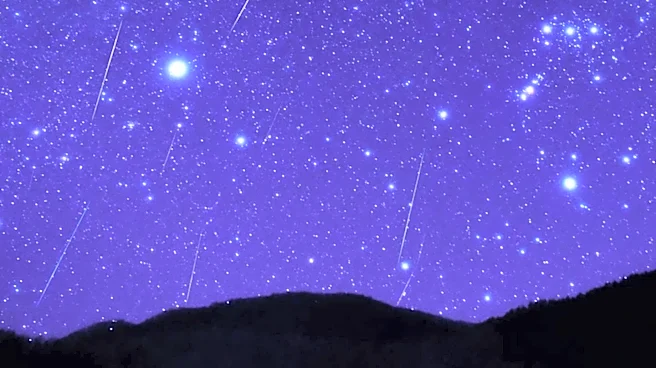
The Northern Taurid meteor shower is set to peak late on November 11, with optimal visibility around midnight for stargazers in the Kansas City area. This celestial event is known for producing bright 'fireballs,' which are exceptionally luminous meteors
that outshine Venus, according to David Young of the Astronomical Society of Kansas City. Unlike other more prolific meteor showers such as the Geminids or Perseids, the Northern Taurids will offer a more modest quantity of meteors, with an estimated two to three per hour. However, their distinguishing characteristic is their brightness and slower movement. Viewing conditions are expected to be favorable due to a near-moonless sky, as Wednesday marks the first day of the waxing crescent, meaning only half the moon will be illuminated, contributing to darker skies. To best observe the shower, experts recommend finding a rural area away from city lights and allowing eyes at least 30 minutes to adjust to the darkness, avoiding any white light from phones or flashlights.
Why It's Important?
This astronomical event provides a unique opportunity for public engagement with science and the natural world, particularly for residents in and around Kansas City. The emphasis on leaving city lights behind and avoiding electronic devices for optimal viewing encourages a temporary disconnection from modern urban life, fostering a direct experience with the night sky. For local astronomical societies and observatories, even though many are closed for the season, events like the Northern Taurids can spark interest in astronomy and space science among the general public. The visibility of 'fireballs' adds an element of spectacle that can draw new enthusiasts to stargazing. Furthermore, the advice on how to view the shower underscores the impact of light pollution on astronomical observation, subtly raising awareness about environmental factors affecting natural phenomena.
What's Next?
Following the peak of the Northern Taurids, stargazers can anticipate other celestial events. The Leonid meteor shower is expected to reach its height around November 17-18, though it is generally considered milder, producing about a dozen meteors per hour under dark skies. The most significant upcoming event will be the Geminid meteor shower, which is scheduled to peak on the night of December 13-14. This shower is highly anticipated, with predictions of 100-150 meteors per hour under ideal dark conditions, making it one of the year's best meteor displays. These subsequent showers will continue to offer opportunities for public observation and engagement with astronomy, building on the interest generated by the Northern Taurids.
Beyond the Headlines
The recurring nature of meteor showers like the Northern Taurids serves as a consistent reminder of Earth's journey through space and its interaction with cosmic debris. The meteors themselves are remnants from the ancient path of the Encke comet, with Earth sweeping up these small particles as it crosses the comet's old orbit. While these particles are typically small, often no larger than a marble, their entry into the atmosphere creates the visible streaks of light. This phenomenon highlights the dynamic processes occurring within our solar system and the continuous, albeit often unseen, cosmic interactions that shape our environment. The public's ability to witness such events without specialized equipment democratizes scientific observation, making the wonders of space accessible to everyone.