




What's Happening?
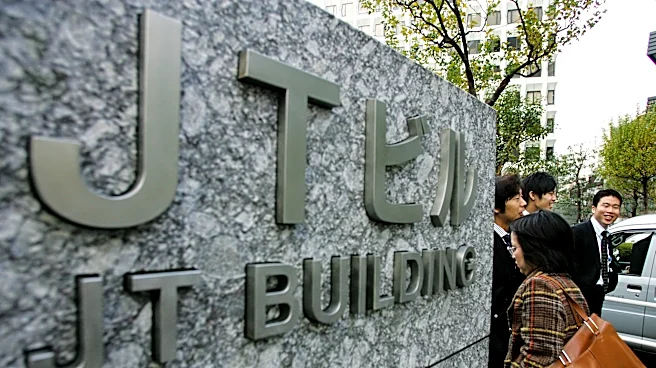
Russian President Vladimir Putin has ordered the seizure of additional Russian assets belonging to Japan Tobacco. This action follows an earlier decree to place assets of the Japanese conglomerate's four units in Russia under temporary management. The
latest order, signed on Friday, places all shares in three Japan Tobacco units—Pereslavl-Tobacco, JTI Innovative Products, and JTI Russia—under the temporary management of a Russian company. This move is in accordance with an executive order from April 2023, which allows Russia to place assets of individuals from 'unfriendly countries' under its control. The Russian government states this is a response to sanctions imposed against Moscow following its invasion of Ukraine. Despite many Japanese companies withdrawing from the Russian market, Japan Tobacco has continued its operations in the country. The Japanese government has protested these seizures.
Why It's Important?
This action by Russia signifies an escalation in its retaliatory measures against countries it deems 'unfriendly' due to sanctions. For Japan, it represents a direct economic impact on one of its major corporations still operating in Russia, potentially setting a precedent for other Japanese or international companies that have maintained a presence there. The seizure underscores the increasing risks for foreign businesses in Russia amidst the ongoing geopolitical tensions. It also highlights Russia's willingness to use economic leverage and asset nationalization as a tool in its foreign policy, further complicating international business relations and investment in the country. The move could deter future foreign investment and prompt remaining companies to reconsider their operations in Russia.
What's Next?
The Japanese government is likely to continue protesting these seizures, potentially exploring diplomatic or legal avenues, though the effectiveness of such measures against Russia's sovereign actions remains uncertain. Other foreign companies still operating in Russia may face increased scrutiny and potential similar actions, prompting them to re-evaluate their risk exposure and operational strategies. This could lead to further withdrawals of international businesses from the Russian market. The situation may also influence broader international discussions on asset protection and the rule of law in the context of geopolitical conflicts, potentially leading to new policies or agreements aimed at safeguarding foreign investments in volatile regions.
Beyond the Headlines
The seizure of Japan Tobacco's assets reflects a broader trend of economic nationalism and state intervention in Russia, driven by geopolitical isolation and the desire to exert control over key industries. This move could be interpreted as a strategic effort by Russia to consolidate economic power domestically and reduce foreign influence, particularly from countries perceived as hostile. It also raises questions about the long-term viability of international business engagement in Russia, suggesting a shift towards a more insular economic environment. The ethical implications for companies choosing to remain in Russia, balancing business interests with geopolitical pressures and potential asset risks, will likely become a more prominent discussion point in corporate governance and international relations.