






What's Happening?
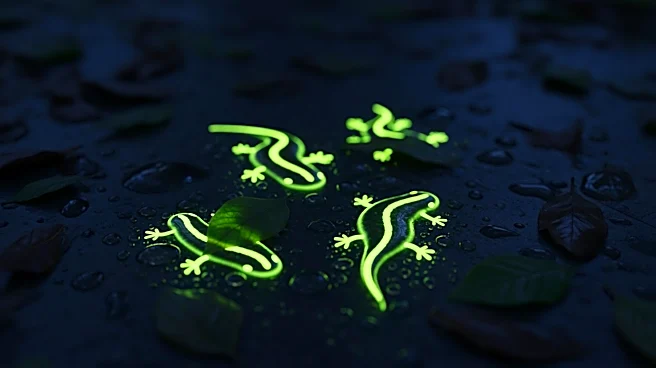
Researchers have discovered that fire salamanders (Salamandra salamandra) exhibit biofluorescence, emitting a blue-green glow under ultraviolet light. This phenomenon was observed in ten salamanders in Catalonia, Spain, marking the first time biofluorescence has
been recorded in this well-studied species. The glow is produced by secretions from the salamanders' skin glands, primarily visible on the sides and undersides of their bodies. Scientists believe this biofluorescence may play a role in attracting mates or deterring predators.
Why It's Important?
The discovery of biofluorescence in fire salamanders adds a new dimension to the understanding of amphibian biology and ecology. This finding could influence studies on animal communication and predator-prey interactions, offering insights into evolutionary adaptations. The research may also impact conservation strategies, as understanding the salamanders' mating and defense mechanisms can aid in preserving their populations. Additionally, this discovery could inspire biomimetic applications in technology and design.