




What's Happening?
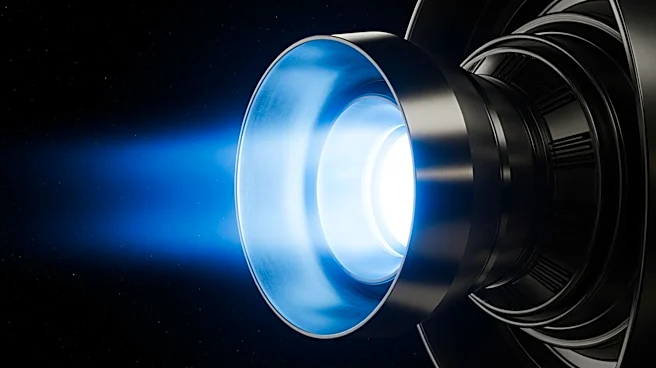
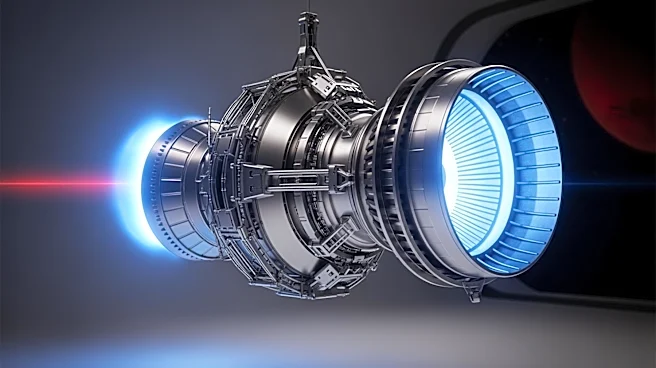
NASA has successfully tested a new lithium-plasma engine, setting a record of 120 kilowatts of power, which is 25 times greater than the current electric thrusters used in space missions. This engine, designed for future human missions to Mars, uses lithium metal
vapor as fuel and promises significant advancements in propulsion technology. The engine's continuous operation allows for gradual speed increases, potentially reaching speeds of over 400,000 kilometers per hour. This development is part of NASA's efforts to create more efficient propulsion systems for long-duration space missions, reducing fuel consumption by up to 90% compared to chemical rockets.
Why It's Important?
The successful test of the lithium-plasma engine represents a significant leap forward in space propulsion technology. This advancement could drastically reduce the time and resources needed for missions to Mars and beyond, making human exploration of the solar system more feasible. The engine's efficiency in fuel usage and its ability to sustain high speeds over long periods are crucial for the viability of extended space missions. This technology not only enhances NASA's capabilities but also positions the U.S. as a leader in space exploration, potentially opening new opportunities for international collaboration and commercial space ventures.